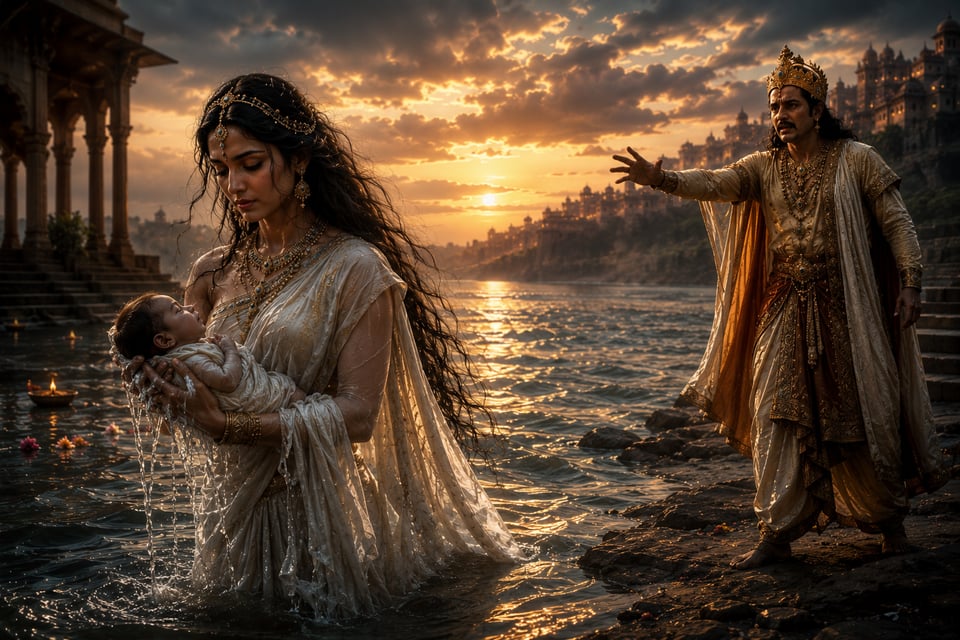
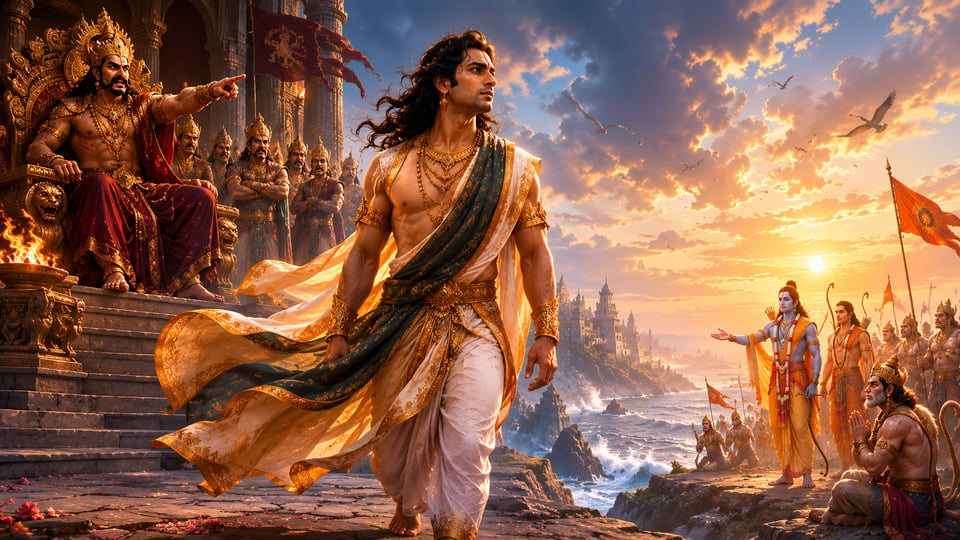
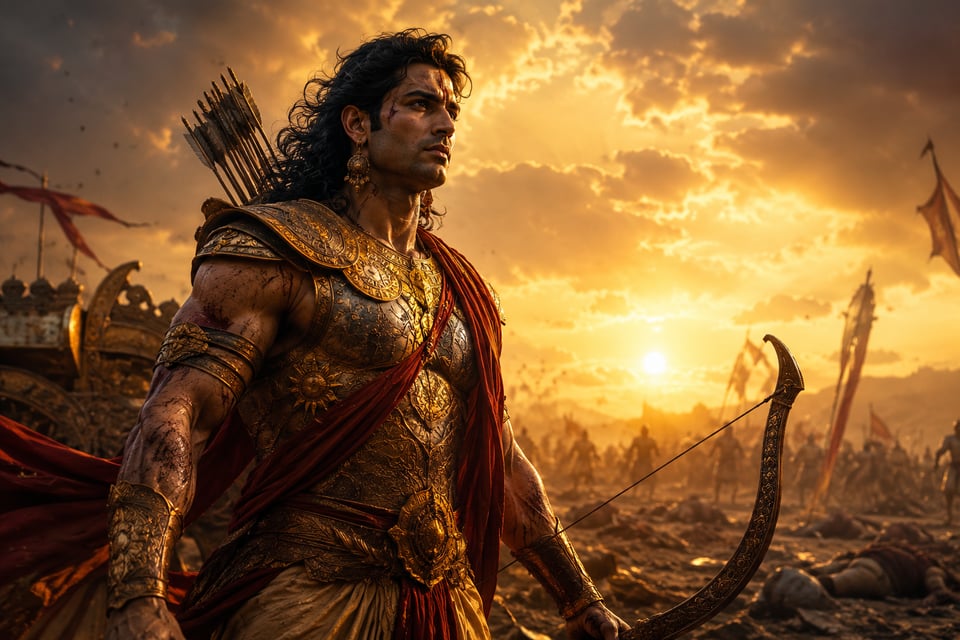
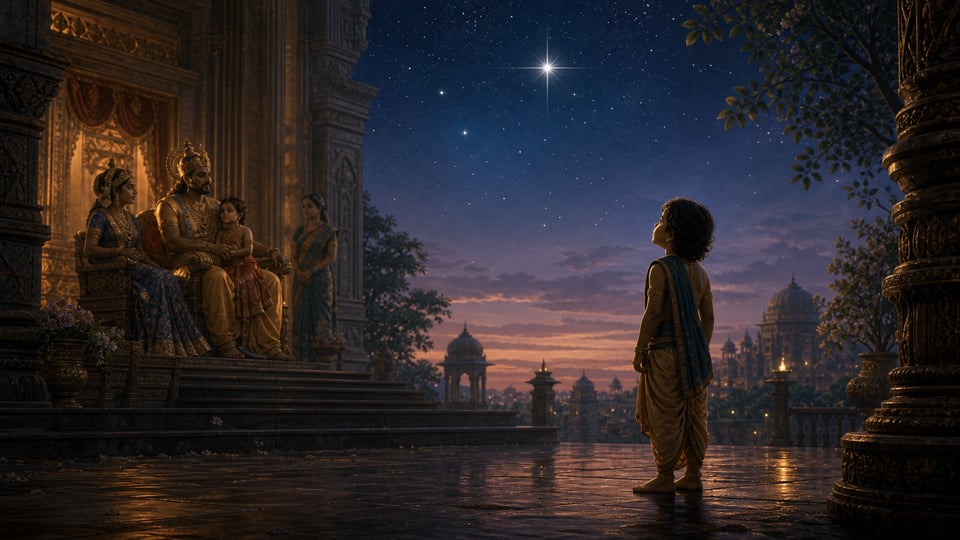
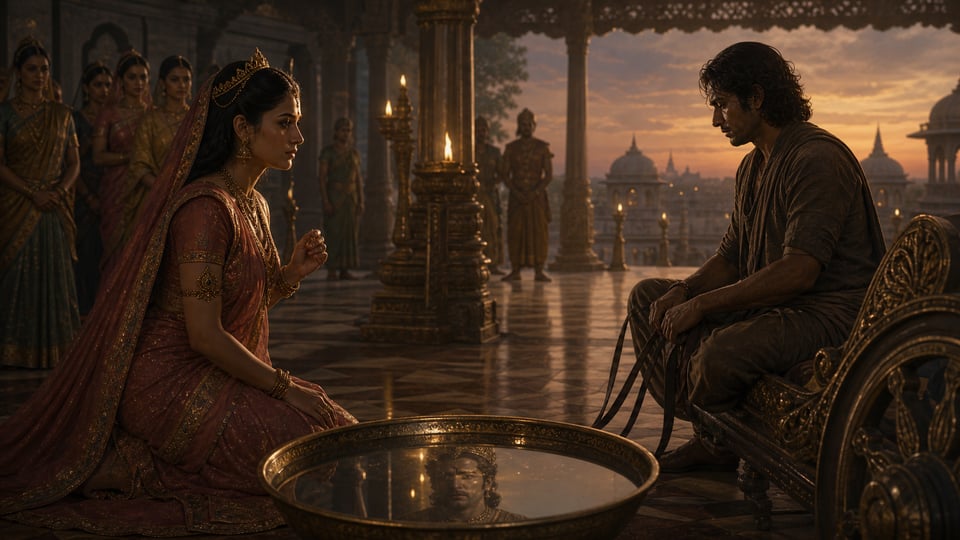
He was supposed to be king. Instead, he walked into the forest with his wife and brother not knowing if he would ever return.
25 June 2026 · 4 min read
One evening, Rama is preparing to be crowned. Soon afterward, he is preparing to leave home for fourteen years.
The Ramayana calls this exile, not migration. Rama is a royal heir compelled by a palace decision. His journey is not the same as modern movement for work, education, or survival. Yet the story of his exile reveals what happens to identity, relationships, and belonging when people are forced to leave home.
Rama's departure is not a carefully planned relocation. Kaikeyi invokes Dasharatha's old promises and demands that Bharata receive the kingdom while Rama lives in the forest for fourteen years.
This is not a short ritual retreat. Fourteen years can transform a household, a political order, and every relationship left behind. A person can leave as a young adult and return after parents have died, children have grown, and social networks have reorganized.
The Ayodhya Kanda gives the departure emotional weight through preparation. Royal clothing gives way to forest dress. Public expectation becomes uncertainty. The city reacts. Family members attempt to change the outcome. Practical questions about food, danger, shelter, and companionship replace coronation plans.
Rama attempts to persuade Sita to remain in the palace. He describes the hardship of forest life. But Sita argues for going with him. She says that her duty is to be with her husband, whether in the palace or the forest.
Lakshmana likewise chooses service and companionship over remaining in Ayodhya. He follows his elder brother because he understands his duty is to serve Rama.
Their choices do not make the three people equal in every risk or authority. Sita's vulnerability, Lakshmana's role, and Rama's political obligation differ. But the journey belongs to all three. Each makes a consequential decision to share the path.
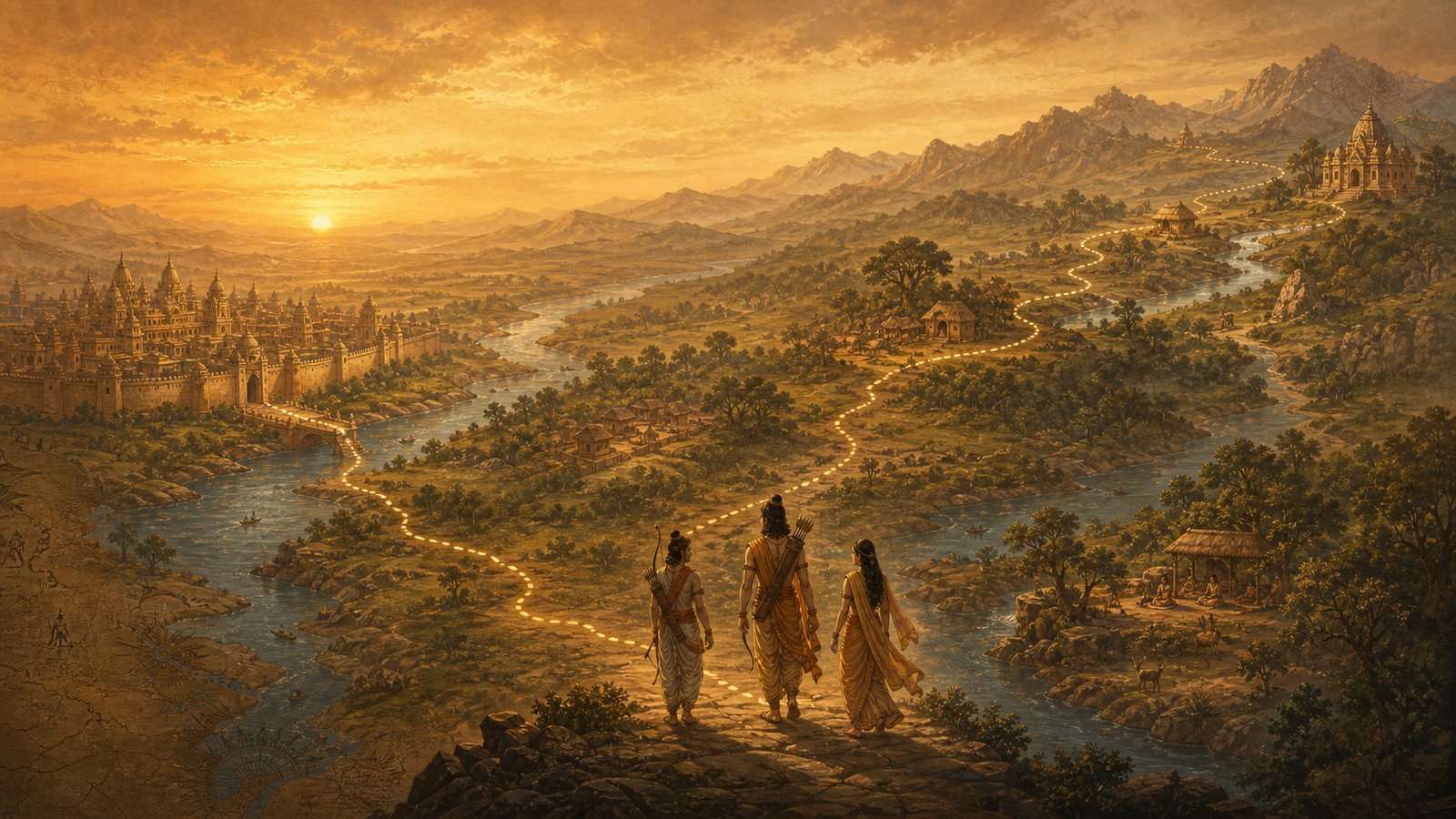
Rama, Sita, and Lakshmana leave Ayodhya and travel through rivers, settlements, hermitages, and dense forests. They encounter Guha, Bharadwaja, Chitrakuta, and other communities along the way. Each stop changes the journey. Hospitality makes movement possible. Advice determines a route. A river crossing becomes a threshold. A temporary shelter becomes part of sacred geography. New relationships form outside the palace network.
Life in the forest is not easy. There is danger, hardship, and discomfort. Yet in that same forest, the exiles build new experiences, new relationships, and new identities. Rama, who was a prince, becomes a forest dweller. Sita, who lived in a palace, adapts to jungle life.
The exile is not without suffering. Dasharatha dies of grief over his son's departure. Ayodhya mourns. Rama, Sita, and Lakshmana also lose their home, their family, and their former identity. They face risks they did not create.
The greatest pain comes when Ravana abducts Sita. Lakshmana is wounded. Rama loses his wife. Their forest journey becomes even more difficult. Rama and Lakshmana set out to find Sita, and that search leads them to the monkey army, Sugriva, Hanuman, and eventually to Lanka.
After fourteen years, Rama returns to Ayodhya. But return is not a simple reversal. Dasharatha has died. Bharata has been ruling as a representative. Ayodhya has changed. Rama himself has changed he is no longer just a prince; he is a warrior, a husband, a leader, and a person shaped by long experience.
What did the exile teach him? Home is not only a place. It is a combination of relationships, memory, and identity. Rama did not live in Ayodhya for fourteen years, yet Ayodhya continued to define his duty, his family, and his promise. The forest was not empty space between departure and return; it became a lived world with new obligations and relationships.
Rama was sent into exile because of Kaikeyi's manipulation. She used the two boons King Dasharatha had granted her to demand that Rama be exiled for fourteen years and that her son Bharata be crowned king instead. This was part of a palace conspiracy orchestrated by Kaikeyi's maid Manthara.
Sita insisted on accompanying Rama despite his warnings about the hardships of forest life, arguing that her duty as a wife was to share his fate. Lakshmana also chose to serve and accompany his elder brother, considering it his dharma. Both made active decisions to share the exile.
During the exile, Rama, Sita, and Lakshmana travelled through rivers, forests, and hermitages. They met sages, forest communities, and allies. Sita was abducted by Ravana, leading to a war in Lanka. Rama defeated Ravana and eventually returned to Ayodhya after completing the fourteen years.
Yes, Rama returned to Ayodhya after completing the fourteen-year exile. His return was celebrated with his coronation as king. But things had changed—Dasharatha had died, Bharata had been governing, and Rama himself had been transformed by his experiences.
Valmiki Ramayana, Ayodhya Kanda 18–56, including the fourteen-year exile, preparations, and the decisions of Sita and Lakshmana.
knowledge-base-ai-ingest/plain-text/028_ramayana_dutt_1892_text.txt.
Mythological
15 July 2026 · 6 min read
Mythological
14 July 2026 · 4 min read
Mythological
13 July 2026 · 6 min read
Mythological
1 July 2026 · 12 min read
Mythological
30 June 2026 · 12 min read
Mythological
30 June 2026 · 12 min read