Explore the Mahabharata's most misunderstood vow and the loneliness of keeping a secret no one can share.
15 July 2026 · 6 min read
Most tellings of the Mahabharata rush past Ganga to get to Bhishma. She appears for a few pages, marries a king, drowns seven of her own children, keeps the eighth, and vanishes back into the river she came from. It reads, at first, like a horror story wearing the costume of a myth. It's worth slowing down on, because Ganga's vow is really a story about what it costs to keep a promise nobody around you is allowed to understand.
Ganga was not an ordinary woman who happened to marry a king. In her river form, she was cursed alongside seven other celestial beings the Vasus who had once been punished to be born as mortals for a theft committed against the sage Vashistha. Their punishment could be shortened if a divine mother agreed to bear them as her children and release them from mortal life almost immediately after birth drowning each newborn before the curse could fully take hold and trap them in a full human lifetime.
Ganga agreed to be that mother. It was, from the very start, an act of mercy toward the Vasus, not cruelty toward any child of her own a plan built entirely around the idea that each birth would last only minutes.
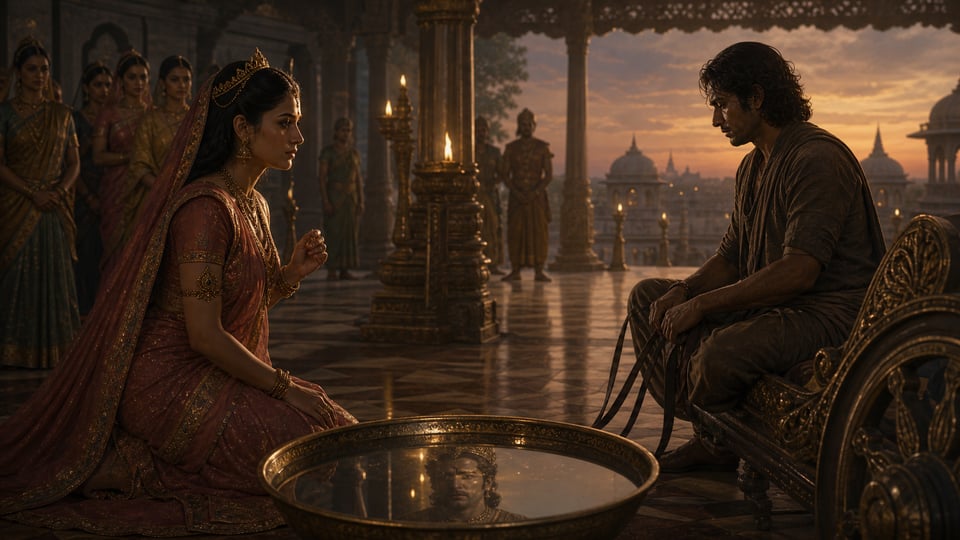
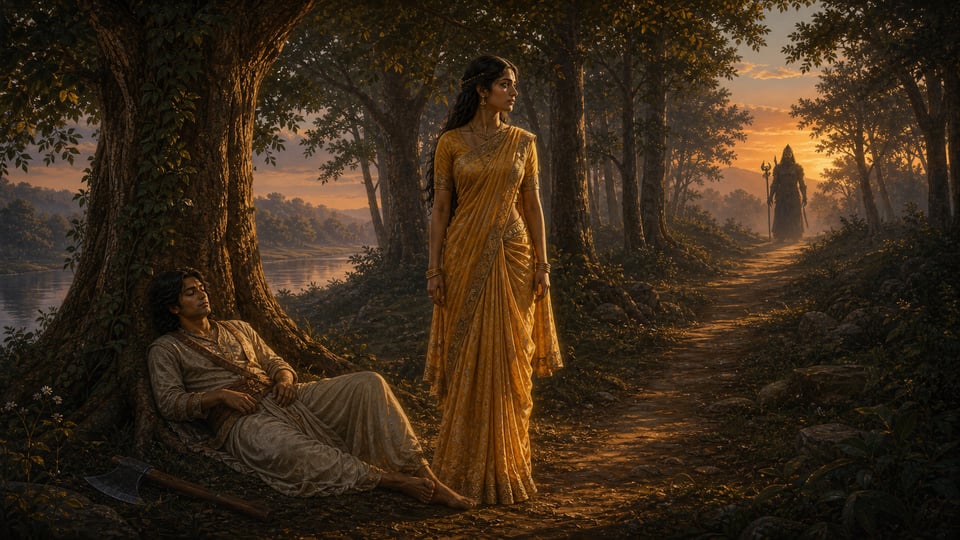
King Shantanu of Hastinapur met Ganga on the riverbank and fell for her instantly. She agreed to marry him on a single condition: he must never question anything she did, no matter what he witnessed, and never demand an explanation. If he broke that condition even once, she would leave him immediately.
Shantanu, besotted, agreed without hesitation the kind of promise that is easy to make when you cannot yet imagine what it will actually ask of you.
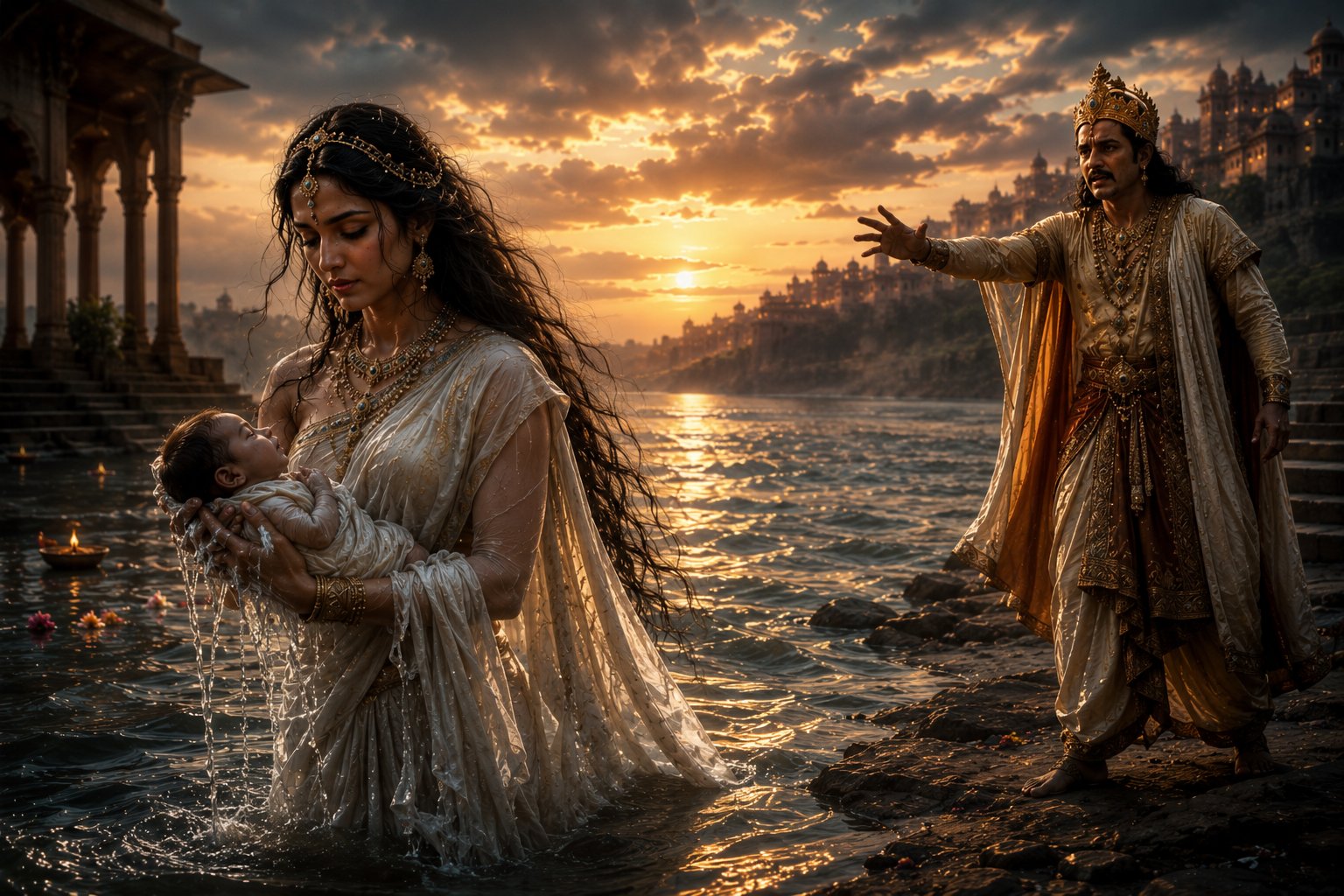
One by one, Ganga bore him sons. And one by one, moments after each birth, she carried the newborn to the river and drowned him, freeing another Vasu from the curse. Shantanu watched this happen seven times. Seven times, bound by his own word, he said nothing burying, each time, whatever a father feels watching his wife drown their child, because he had promised not to ask why.
When the eighth child was born, Shantanu could not do it again. As Ganga carried the infant toward the water, he stopped her, demanding to know why she had taken their children and why this one would not be spared the same fate.
Ganga answered him fully, at last the Vasus, the curse, the mercy embedded in each drowning, the entire plan he had never been allowed to see. And then, exactly as she had warned him at the very beginning, she left. The condition had been broken, so the marriage ended.
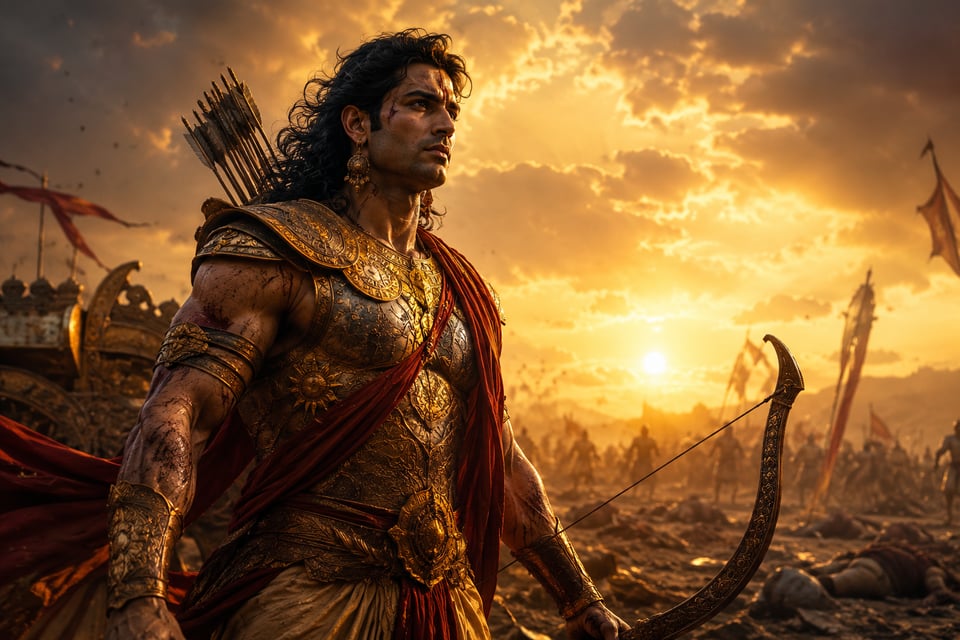
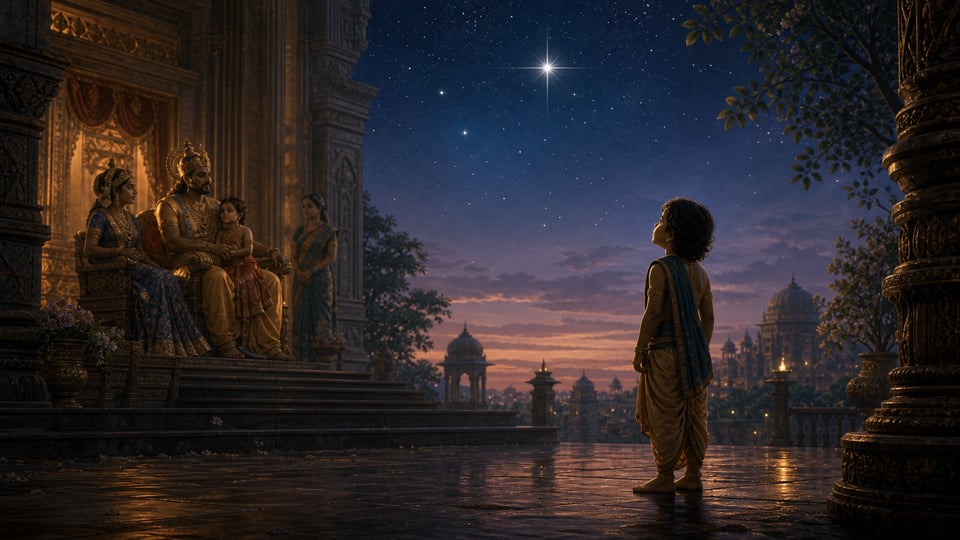
But she did not take the eighth son with her into the river. She kept him, raised him herself for a time, and eventually returned him to Shantanu trained in every weapon and every scripture a prince could need. That child was Devavrata the boy who would grow up to become Bhishma, the man whose own vow of celibacy would later reshape the entire Kuru line.
What makes Ganga's story hard to sit with isn't the plot it's the ambiguity built into it on purpose.
From Shantanu's side, watching seven of his children drowned by their own mother, in silence, with no explanation offered, is very difficult to read as anything but cruelty. From Ganga's side, each act was mercy freeing a cursed soul from a mortal life it never chose, at the cost of grief she alone was allowed to carry, since she alone understood what was actually happening.
The story never asks you to decide that Ganga was right, or that Shantanu should have kept his silence longer. It sits, deliberately, in the space between those two readings a vow that can look identical to devotion or to horror depending entirely on whether you know what it's actually for.
Ganga's seven drowned sons rarely get remembered by name. What survives from her story is Bhishma a son raised by a mother who could love completely and still let go completely, and who would go on to make his own vow so absolute it would outlast his own desire to break it, decades later, watching a war he could have stopped happen anyway.
It's tempting to read Ganga's vow as a story about the gods, or about curses, or about a strange marriage condition from a bygone age. But underneath all of that, it's a story about the particular loneliness of the person who understands why something terrible has to happen and has to carry that understanding without anyone else around them being allowed to share it, bound by a promise they made before they ever knew what it would ask of them.
In the Mahabharata, Ganga is the goddess of the sacred river Ganges who takes human form and marries King Shantanu of Hastinapur. She is best known as the mother of Bhishma (born Devavrata), one of the most powerful and complex figures in the entire epic.
Ganga drowned her first seven children to fulfill a vow she had made to the Vasus eight celestial beings who were cursed to be born as mortals. By ending each child's life immediately after birth, she freed them from the curse before it could fully bind them to a human lifetime. Each drowning was, in her understanding, an act of mercy rather than harm.
The Vasus were a group of eight divine beings who were cursed by the sage Vashistha to be born as mortals after one of them stole his sacred cow. Ganga agreed to carry them as her children and release each one from mortal life immediately after birth, so that only a brief portion of the curse would be served.
Devavrata was the eighth son of Ganga and Shantanu the one Shantanu stopped her from drowning. He is better known by his later name Bhishma. Ganga raised him herself and returned him to his father fully trained. He later took a famous vow of lifelong celibacy, earning him the name Bhishma, meaning "he of the terrible vow."
Ganga left Shantanu because he broke the condition of their marriage. She had told him at the very beginning that he must never question her actions. When he stopped her from drowning the eighth child and demanded an explanation, the condition was broken and as she had warned, she left immediately. The agreement was always clear; it was Shantanu's patience that ran out.
Ganga's story explores the loneliness of the person who must do something that looks terrible from outside but carries a meaning they are not allowed to share. It asks whether a vow can be both merciful and cruel at the same time, depending entirely on what you know and what you are allowed to understand.
Mythological
13 July 2026 · 6 min read
Mythological
1 July 2026 · 12 min read
Mythological
30 June 2026 · 12 min read
Mythological
30 June 2026 · 12 min read
Mythological
26 June 2026 · 11 min read
Mythological
26 June 2026 · 12 min read