From the final breath to the 13-day mourning period and annual Shraddha, complete guide to Hindu death rituals in Nepal's Brahmin and Kshetri communities.
22 July 2026 · 13 min read
Death, in the Hindu worldview, is not an ending. It is a transition the soul leaving one temporary home and moving toward its next. Every ritual in the days surrounding a death in Nepal's Brahmin and Kshetri communities exists to make that transition as peaceful, complete, and dignified as possible.
To an outsider, these rituals can appear overwhelming in their detail: the specific positioning of the body, the chanting of particular names of God, the shaving of the son's head, the rice balls offered on the thirteenth day. But each element has a reason a theological purpose, a practical wisdom, or a form of love expressed through action. Understanding these rituals means understanding a civilization's deepest beliefs about what a human life is, what death means, and what if anything comes after.
This article walks through the complete ritual journey, from the final moments of life through the annual remembrance that can extend for generations.
Before the rituals themselves, it helps to understand the beliefs that animate them.
Hinduism teaches that the body is temporary a vehicle for the soul (atma) during one particular lifetime. Death is the moment the soul leaves that vehicle behind. Where the soul goes next depends on the accumulated karma of the life just lived: it may be reborn into another life, or in the most blessed outcome it may achieve moksha, liberation from the cycle of birth and death altogether.
The rituals surrounding death serve multiple purposes at once. They ease the dying person's passage. They purify the space around death. They support the grieving family. And crucially, they are believed to actively help the departed soul navigate the afterlife journey and find peace.
The eldest son carries the primary ritual responsibility across all of these rites. This is not merely tradition for its own sake. In Hindu belief, a son performing the final rites is considered one of the most important acts of filial duty the repayment of the deepest debt a child owes to a parent.
When it becomes clear that a family member is dying, the household gathers. What follows is not a period of helpless waiting but of purposeful, loving preparation.
Water ideally from the Ganga, or water infused with tulsi (holy basil) leaves is placed on the lips of the dying person. This act carries both spiritual and symbolic weight. The Ganga is considered the most sacred river in Hinduism, believed to cleanse sins and ease the soul's departure. Tulsi is associated with Vishnu and is considered deeply purifying. The gesture says: you are not dying alone; we are helping you across.
Family members gather and begin chanting Om Namo Narayana. The continuous sound of God's name in the dying person's ear is believed to calm the mind, focus the departing soul, and provide an auspicious final impression before death.
If it can be arranged, the dying person is moved to the floor and positioned with their head facing north or east. This direction is considered auspicious for the soul's departure north points toward the Himalayas and the divine; east faces the sunrise and the sacred.
These preparations are an act of profound care. In a culture where dying "well" peacefully, consciously, with God's name in the ears is considered a genuine blessing, the family's role in those final hours is deeply important.
Once death occurs, the body becomes the center of careful, respectful attention.
It is bathed and cleaned an act of purification that mirrors the bathing of a newborn at the beginning of life. Men are dressed in white cloth; married women are dressed in a red sari, the color of marriage and auspiciousness, so that they are cremated as a wife rather than as a widow. The thumbs and toes are tied together. A tilak a sacred mark is placed on the forehead.
The body is then placed on a bamboo bier and covered with a white shroud. White, in Hindu tradition, is the color of death and mourning an absence of color, an absence of the festivals and celebrations from which the grieving now withdraw.
Word goes out to family and community. Those who come to pay their respects and accompany the body to the cremation ground are called malami a word that carries the sense of mourners, companions in grief. The presence of malami matters. To accompany a body to the cremation ground is considered an act of service and respect, and the number of people who come speaks to how the deceased was regarded in the community.
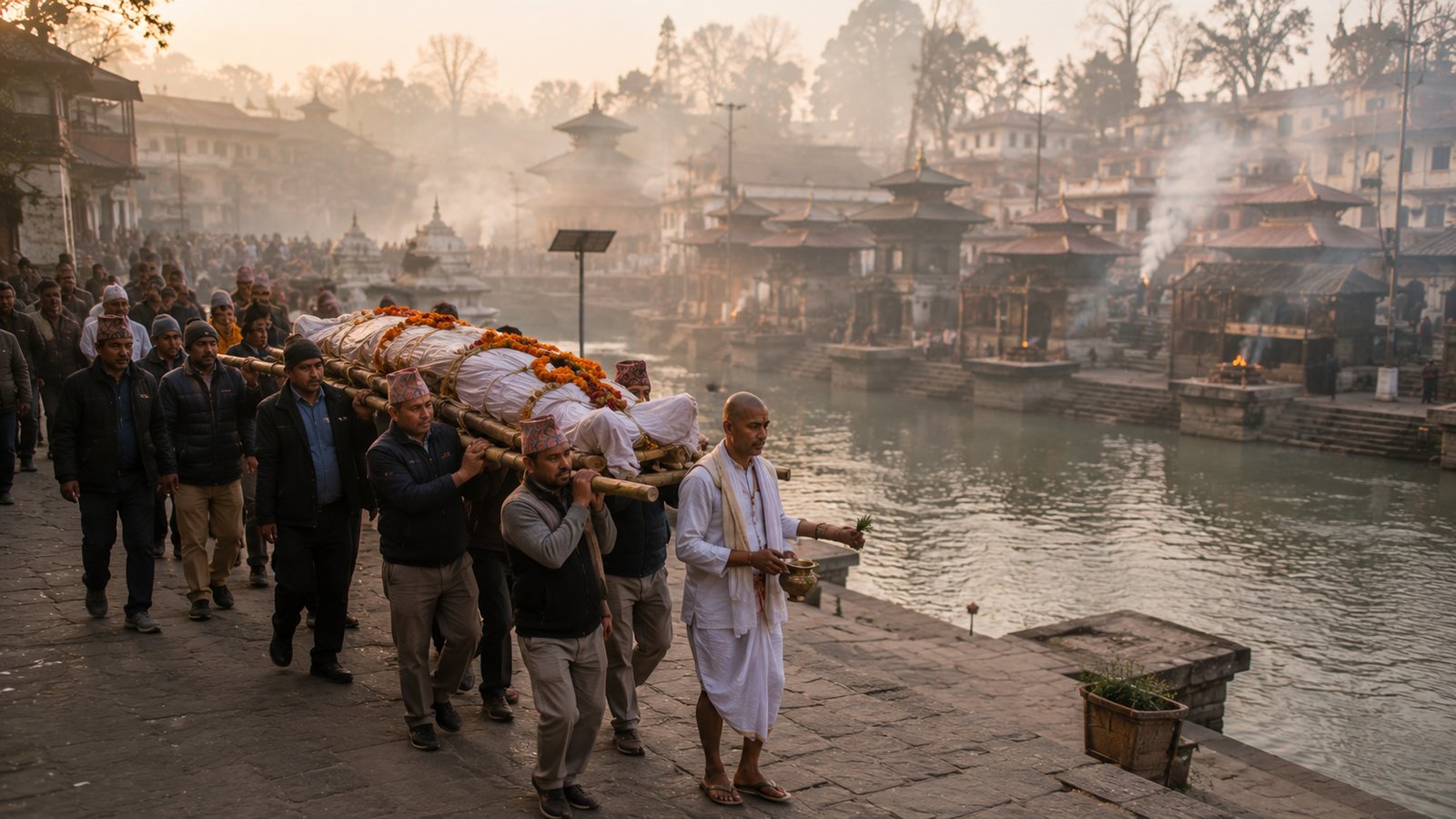
The journey from home to cremation ground is called shav yatra the procession of the body. Male family members carry the bier on their shoulders, led by the eldest son or closest male relative who will serve as the chief mourner.
The body is placed with the head facing south the direction associated with Yama, the god of death and the ruler of the afterlife in Hindu mythology. This positioning is precise and intentional. The body now faces the realm it is about to enter.
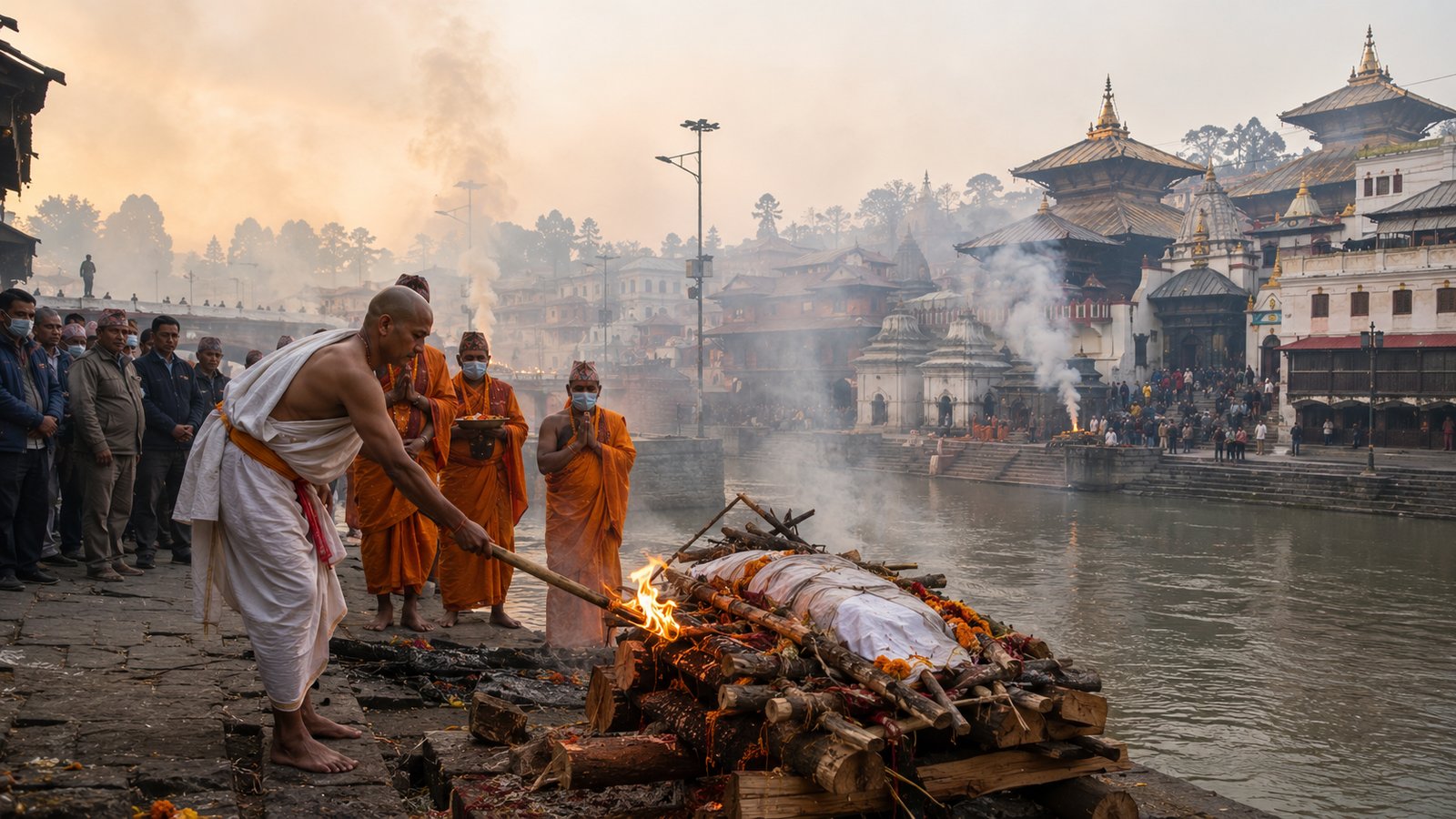
In Nepal, the cremation ghats beside rivers the Bagmati in Kathmandu, the Kaligandaki, the Koshi, the Devghat are considered especially sacred. The flowing water of a river is believed to carry merit to the deceased and help purify the soul. The Bagmati in particular, flowing to join the Ganga, holds exceptional significance for the Hindu communities of the Kathmandu Valley. Pashupatinath Temple's cremation ghat is among the most sacred in the Hindu world.
At the cremation ground, the final and most significant ritual of the physical body takes place.
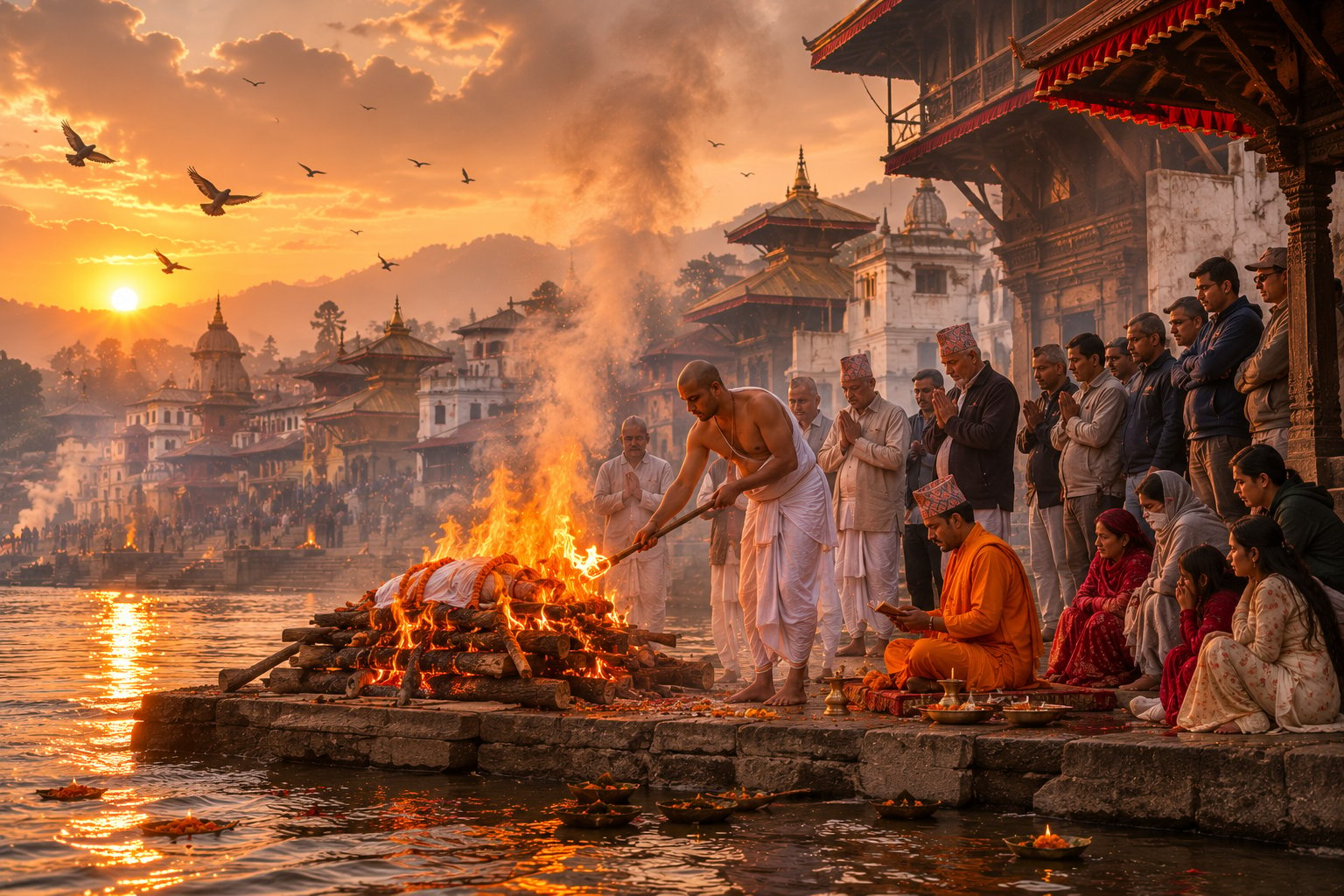
The pyre is prepared traditionally of wood, with specific woods considered more sacred and the body is laid upon it. Then comes the moment of mukhagni: the lighting of the pyre by the chief mourner, almost always the eldest son.
This act is considered among the most sacred duties a son can perform for a parent. The fire used ideally brought from home or from a temple is placed at the mouth (mukha) of the deceased. It begins the transformation that Hindu theology describes as the release of the soul from its material container.
Offerings are made throughout the cremation: ghee, sesame seeds, sandalwood. A priest recites Vedic mantras and may read from the Bhagavad Gita particularly the passages that speak of the soul's immortality, its journey beyond the body, and its ultimate nature as something that fire cannot burn, water cannot wet, and death cannot truly touch.
The cremation is witnessed by the male members of the family. It is a long, silent vigil hours during which the full reality of the loss settles in. There is no hurrying through it.
On the third day, the family returns to collect the ashes and immerse them in a holy river flowing to the Ganga, is the most common destination. This immersion the dissolution of what remains of the physical body into sacred water is the final act of the body's journey.
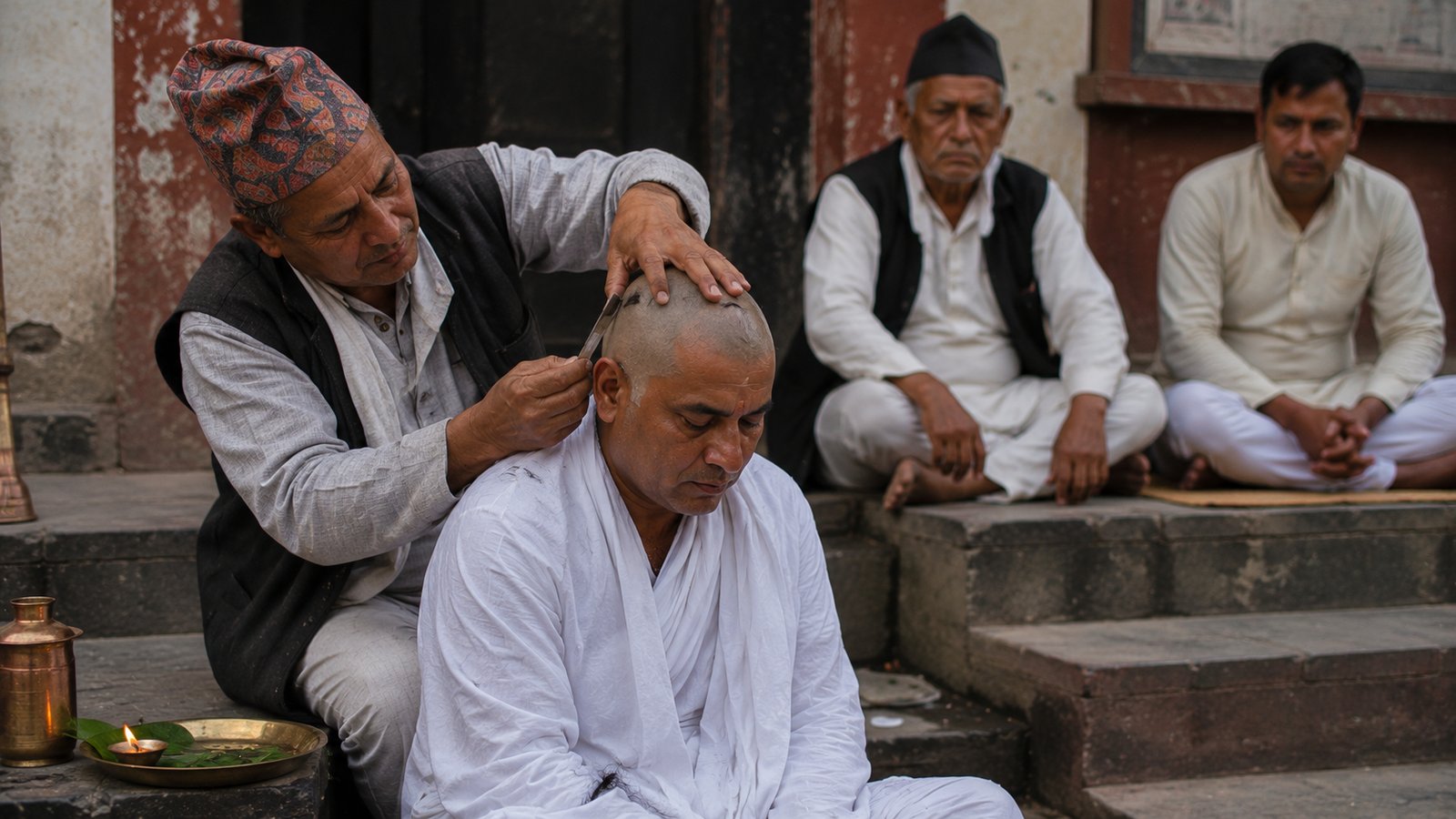
The death of a family member initiates a structured mourning period of ten to thirteen days, known collectively as the period of kriya (mourning rites) or Shraddha.
During this period, the family withdraws from ordinary life. They wear white. They do not attend celebrations, festivals, or social gatherings. They eat simply often abstaining from salt, meat, and other rich foods. The household enters a state of ritual impurity, which is understood not as shame but as the natural consequence of proximity to death: the boundary between life and the afterlife has been briefly, profoundly close.
The chief mourner the son who lit the pyre undergoes the most visible transformation. He shaves his head completely. This act of removing the hair, one of the body's most visible features, is an outward sign of grief and of the temporary suspension of ordinary self-regard. In many families, it is also understood as a kind of sacrifice made on the deceased's behalf.
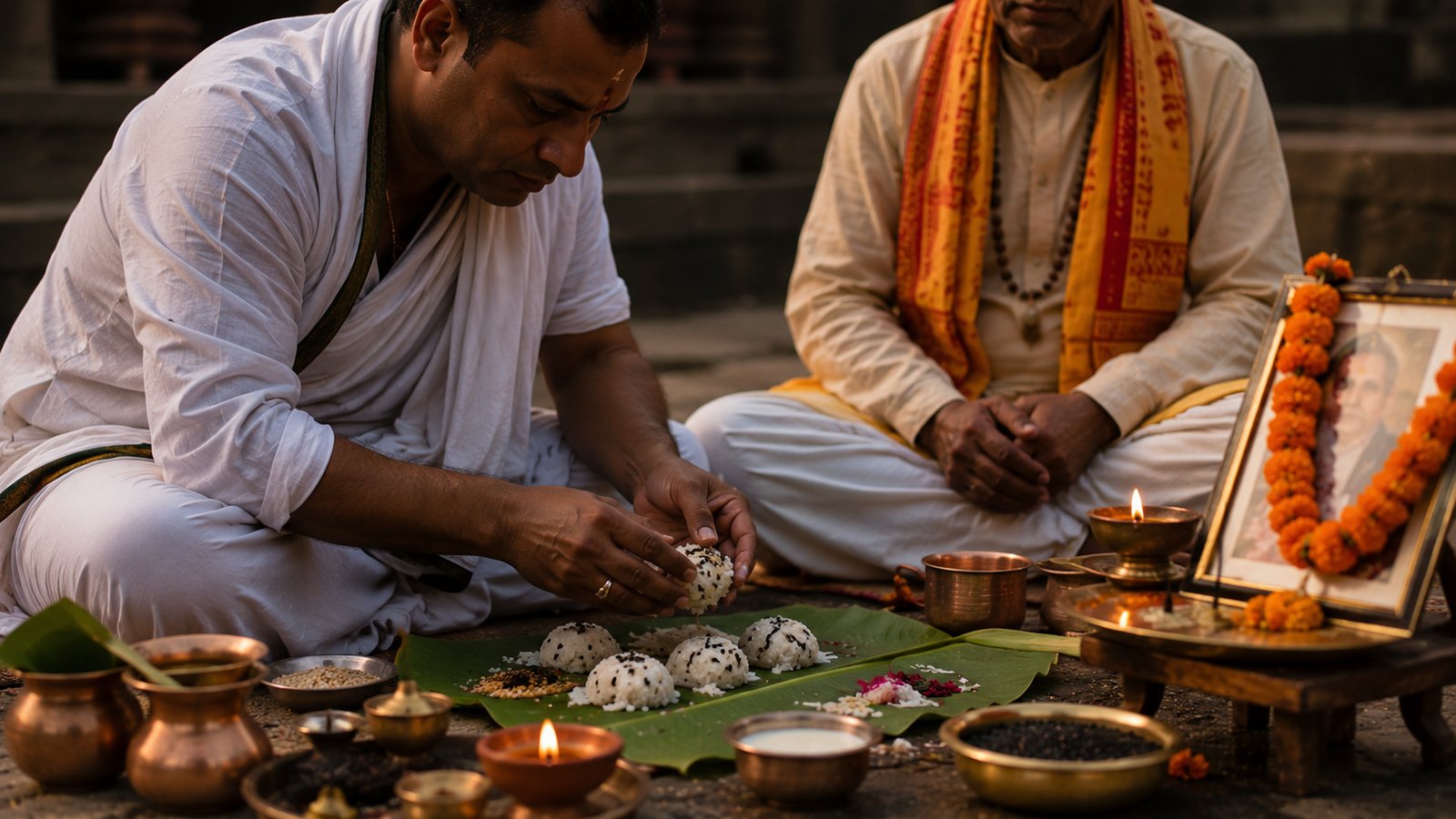
Each day, the chief mourner performs Pind Daan offerings of rice balls shaped and offered as food for the departed soul's journey through the afterlife. This daily ritual is rooted in a belief that the soul, in the days immediately following death, is in a liminal state neither fully departed nor fully arrived in its next destination. The pind offerings are understood as sustenance for that journey.
On the tenth or eleventh day, an important purification ritual called Dashgatra is performed. This marks a turning point the period of most intense mourning begins to formally close. The Kriya Putra (the mourning son) performs specific rites that are understood as the deceased soul gathering itself for the next stage of its journey.
The culminating ritual of the mourning period is Sapindikarana (सपिण्डीकरण) performed on the twelfth or thirteenth day. This ceremony is understood as the moment when the newly deceased soul formally joins the Pitris, the ancestors the community of departed family members who have gone before.
Before this ritual, the soul is considered a preta (ghost or recently departed spirit), wandering in an undefined state. Sapindikarana ends that wandering. Through specific offerings and the priest's recitations, the soul is symbolically welcomed into the company of its ancestors.
A Brahmin priest is fed a full meal and given dakshina (a monetary offering) as part of this ritual. This feeding of the priest is believed to directly benefit the deceased the merit of the gift traveling to the soul through the priest's acceptance of it.
After Sapindikarana, the mourning period formally ends. The family may begin to return to ordinary life.
When the mourning period closes, the family typically hosts a gathering. A meal for friends, neighbors, and community members who supported them through the loss. This is an act of gratitude and social reconnection. It says: we are returning to life; thank you for being with us while we grieved.
The family members who participated in the funeral rites undergo purification rituals ceremonial baths, specific prayers that mark the transition back to ordinary ritual life.
Death, in the Hindu tradition, does not end a family's relationship with its departed members. That relationship is maintained and renewed.
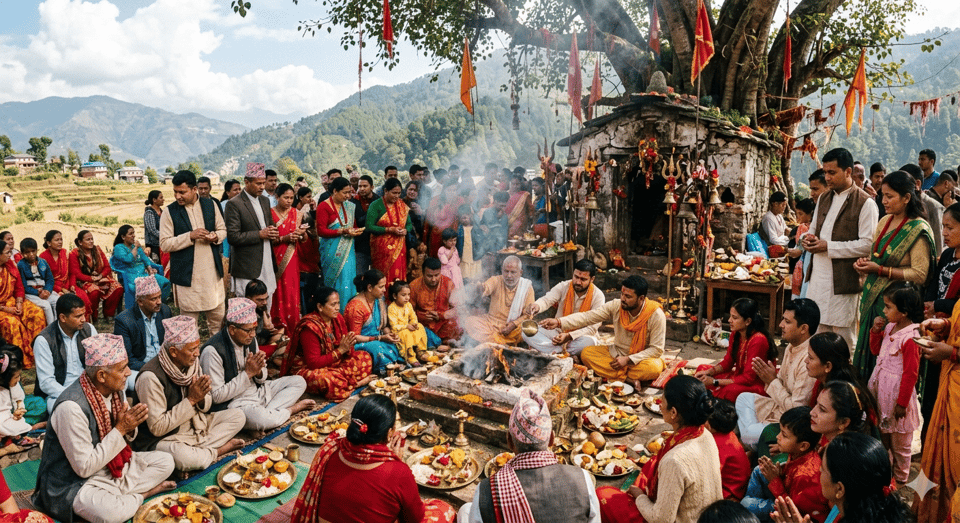
On the anniversary of a death called Barkhi (बार्खी) in Nepali the family performs Shraddha rituals, offerings and prayers specifically for the departed soul. These may include feeding Brahmins, offering food to crows (who are considered messengers to the ancestors), and specific prayers for the deceased's peace.
Once a year, during Pitri Paksha the fortnight of ancestors, which falls in the month of Bhadra (August-September) families perform collective Shraddha for all departed family members across generations. This is a time when the veil between the living and the ancestors is considered especially thin, and when the offerings made by the living are believed to reach the departed with particular clarity.
For many Nepali families, Pitri Paksha is taken seriously across multiple generations. Grandchildren perform Shraddha for grandparents they never met. Great-grandchildren offer pind (पिण्ड) to great-grandparents whose names they know only from family records or stories. The chain of remembrance can extend remarkably far back provided that someone has preserved the names.
This is where ritual and family history intersect in a way that is not merely sentimental.
To perform Shraddha for a departed ancestor, you need to know their name. To perform Sapindikarana correctly, a priest will ask for the deceased's gotra their sage-lineage and may ask for the names of departed family members going back several generations. To maintain the thread of Pitri Paksha across generations requires, at minimum, a record of who came before.
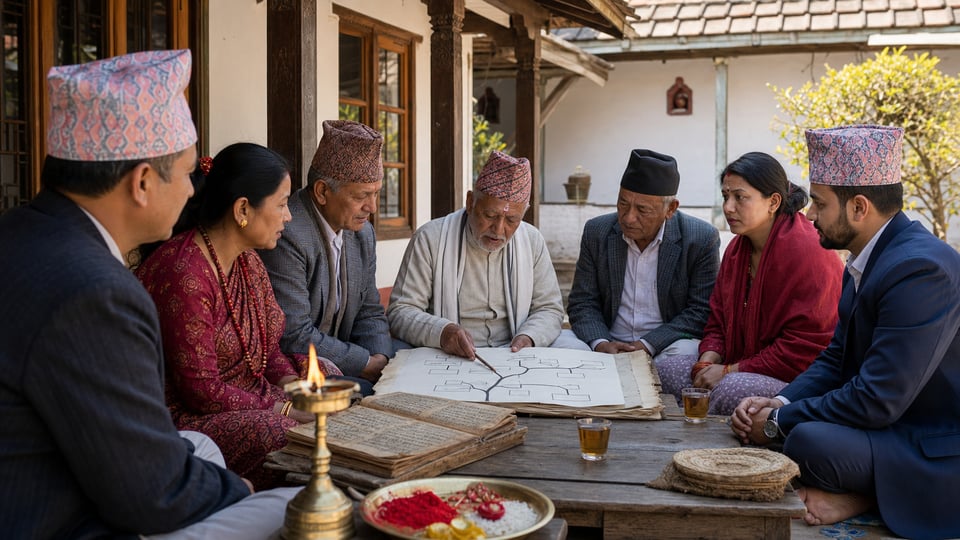
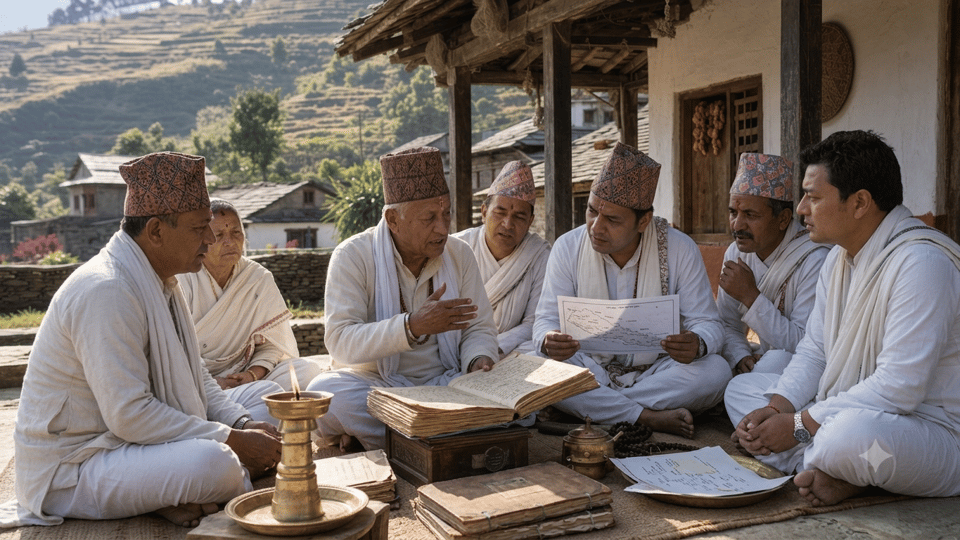
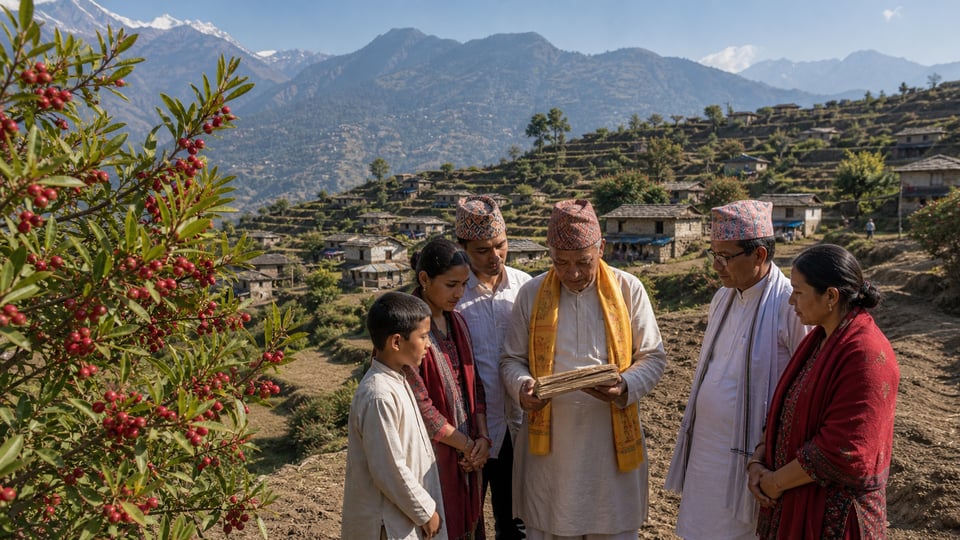
In the past, this knowledge was held in the memory of the eldest members of the family, or recorded in handwritten family genealogies (banshawali) maintained by priests and family scribes. As families migrate, as the generation that carried this memory passes, as handwritten records deteriorate the names begin to fade.
When the names fade, the rituals become incomplete. And something of the family's connection to its own past is quietly lost.
Bamsawali was built in direct response to this reality. A digital family tree that preserves not just names and dates but gotra, pravara, ancestral villages, and family stories creates the foundation that these rituals need. It means that a grandchild performing Shraddha fifty years from now will know whose name to speak and will have a record of where that person came from and who they were.
Preserving your family's genealogy is not just an act of curiosity. In the context of these rituals, it is an act of care for the departed.
Antyeshti literally means "the last sacrifice" and refers to the complete set of Hindu funeral rites from the deathbed preparations through cremation and the mourning period. It is considered one of the sixteen major samskaras (life-cycle rituals) in Hindu tradition, and the only one performed for the deceased rather than the living.
The lighting of the pyre (mukhagni) by the eldest son is considered one of the most sacred duties a child can perform for a parent. In Hindu belief, a son who performs these rites ensures the soul's peaceful passage and helps the deceased attain a favorable afterlife. The act is the repayment of one of the deepest debts .The debt to the parent who gave life. In families without a son, the closest male relative takes this role.
Pind Daan is the offering of rice balls (pind) made each day of the mourning period. In Hindu belief, the soul spends the days immediately after death in a transitional state between the life just ended and the next destination. The pind offerings are understood as food and sustenance for the soul during this liminal journey. The daily nature of the ritual reflects the belief that the soul needs consistent support across the full mourning period.
The thirteenth day is the occasion for Sapindikarana the ritual through which the newly departed soul formally joins the community of ancestors (Pitris). Until this point, the soul is considered to be in an undefined, wandering state. Sapindikarana ends that wandering and integrates the soul into the ancestral lineage. It is one of the most significant rituals of the entire mourning period.
Pitri Paksha is the annual fortnight (fifteen days) dedicated to the ancestors, falling in the Nepali month of Bhadra. During this period, families perform Shraddha offerings of food, prayer, and remembrance for all departed family members. The belief is that the veil between the living and the departed is thinner during this time, and that the offerings made are received with particular clarity. Performing Pitri Paksha correctly requires knowing the names and gotra of those being remembered.
Gotra the sage-lineage a family traces back through the male line is asked by the priest at multiple points during the funeral rites and the Shraddha ceremonies. The correct performance of these rituals requires knowing the gotra of the deceased and, ideally, the names of family members going back several generations. This is one of the most direct ways in which maintaining a family genealogy (banshawali) serves a living ritual purpose rather than merely a historical one.
Traditionally in the Brahmin and Kshetri communities, the primary ritual roles in cremation and the Kriya period have been held by male family members with the eldest son as chief mourner. Women are present, grieve alongside the family, and participate in the mourning period. However, the performance of mukhagni and the main Pind Daan rituals has traditionally been a male role. Practices do vary by region and family, and some communities have begun to allow daughters to perform these rites where no son is present.
Gotra
21 July 2026 · 9 min read
Gotra
19 June 2026 · 7 min read
Gotra
18 June 2026 · 5 min read
Gotra
18 June 2026 · 12 min read
Surname History
23 June 2026 · 11 min read
Surname History
19 June 2026 · 14 min read