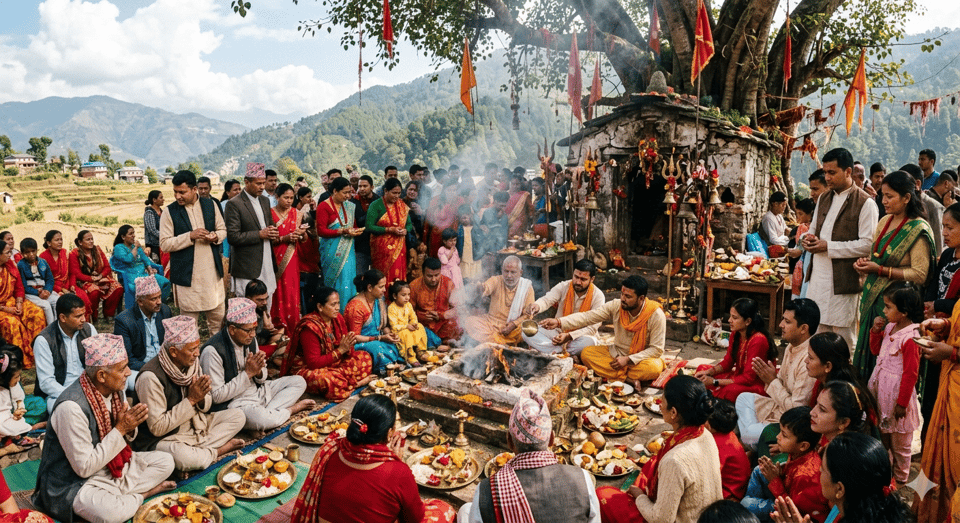
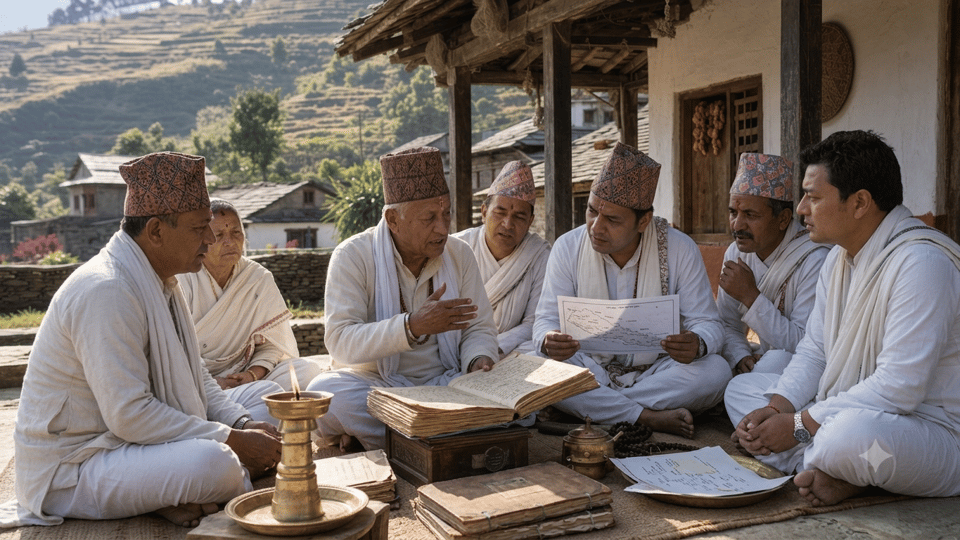
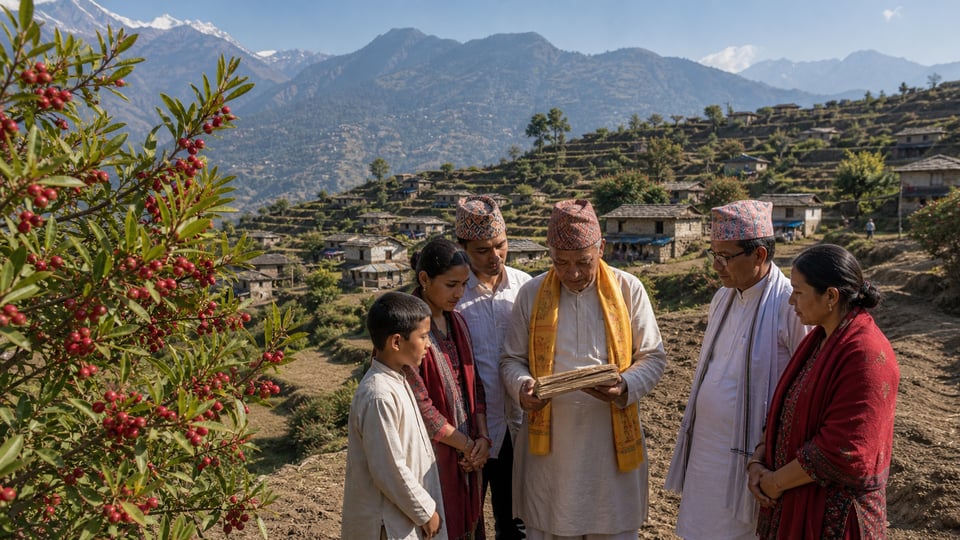
Discover why same-gotra marriage is traditionally avoided in many Hindu and Nepali families.
18 June 2026 · 5 min read
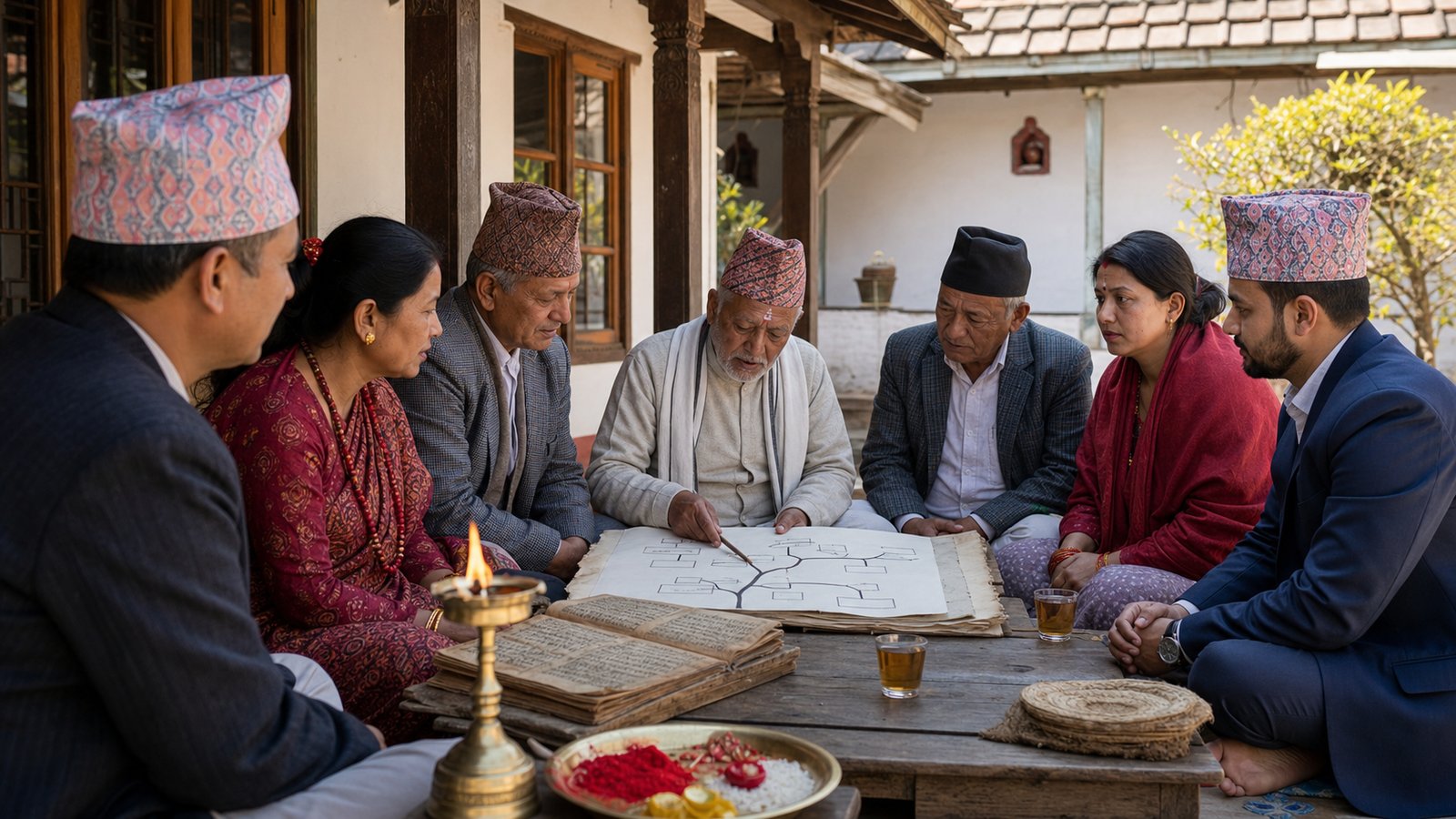
A marriage conversation in a Nepali family can move through many questions: Which family? Which place? Which thar? Which horoscope? Which values? Which education? Which relatives know them?
And then one quiet question can stop everything:
"Gotra ke ho?" (What is the gotra?)
For many Hindu and Nepali families, same-gotra marriage is traditionally avoided. Some people hear this rule from grandparents, others from a priest during marriage discussions, or even only when two families are already serious about a relationship.
But why does gotra matter so much?
The short answer is this: Gotra is an ancestry marker. In many traditions, people of the same gotra are treated as belonging to the same ancient rishi-lineage. Therefore, marriage within the same gotra is avoided because the families are understood as branches of the same ancestral line.
This is not only a ritual rule it is a memory system. To understand same-gotra marriage, we must explore how our ancestors used gotra, pravara, thar, kul, and vansawali to preserve identity across generations.
In the simplest sense, gotra is a lineage identity connected with an ancient rishi (sage). In many Hindu family traditions, a person is identified by more than just their surname:
Thar: The surname or family name (e.g., Paudel, Neupane, Kafle, Acharya, Dahal, Aryal, Shrestha, Thapa).
Gotra: The rishi-lineage identity (e.g., Atreya, Kaudinya, Shandilya, Bharadwaj, Kashyap, Vashishtha, Gautam).
Pravara: The set of revered rishis remembered within that gotra tradition.
Kul: The wider family or clan tradition.
Kul Devata / Kul Devi: The family deity remembered in ritual life.
Vansawali: The recorded lineage from ancestors to descendants.
While a surname appearing on citizenship, passports, and social media is more visible, gotra points deeper into ritual ancestry. Two people may have different surnames but share the same gotra, highlighting how gotra preserves an older map of kinship.
The reason goes beyond the simple "because the elders said so." The traditional logic rests on four key layers:
In many Hindu communities, those of the same gotra are considered descendants of the same ancient rishi. Symbolically, they are treated as relatives, even if the families have lived in different villages for centuries. This is an exogamy rule a practice that encourages marriage outside a defined kinship group to preserve the integrity of the lineage.
Most people can name their father and grandfather, but few can name ten or fifteen generations. Gotra acts as a cultural shortcut for ancestry. Even if you do not know every ancestor by name, the gotra identifies which line you belong to, preventing confusion when written records are missing.
Gotra and pravara are distinct but related. While gotra identifies the broader lineage, pravara specifies the revered rishis within that lineage. Traditional marriage discussions often looked at both to ensure no close ancestral overlap existed. A strong Bansawali (family tree) should preserve not just names, but gotra, pravara, and migration routes.
Historically, marriage was not just a private decision; it connected households, villages, and ritual networks. By avoiding same-gotra marriage, families were pushed to forge bonds with other lineages, widening social connections and preventing the concentration of marriage within overly close kinship circles.
Practices differ significantly by community, region, and family tradition.
Some communities follow gotra rules strictly.
Others emphasize sapinda (blood relation).
Non-Brahmanical or indigenous communities often use different systems like phuki, guthi, or clan-based lineages.
Same-gotra marriage is traditionally avoided in many Hindu and Nepali communities, but it should not be assumed that every community follows the same rule. Nepal’s diversity is its strength—Newar, Kirat, Tamang, Gurung, Magar, Tharu, Madhesi, Dalit, and other groups preserve ancestry through their own unique customs. Bamsawali aims to respect all these diverse systems.
Different surnames do not always mean different lineages. Surnames often formed from village names, titles, or professions. That is why marriage discussions traditionally ask for both the Thar and the Gotra.
This can happen when a surname is broad or adopted independently across regions. Do not rely on the surname alone. Verify with elders, consult old family records, or check with the kul purohit (family priest).
Today, families are scattered globally. Children may know their surname but lack knowledge of their ancestral village or gotra. Digital Bamsawali is essential for preserving:
Names across generations.
Gotra, pravara, and kul devata.
Ancestral villages and migration routes.
Source notes from elders to resolve disagreements.
Consult the Elders: Speak with the oldest living members of your family.
Check Primary Records: Look for old notebooks, tamrapatra (copper plates), or printed family records.
Ask the Family Priest: Consult the kul purohit who performs your family’s rituals.
Document Sources: Note who provided the information and when. If there is disagreement, record both versions rather than forcing a single, potentially incorrect, answer.
At Bamsawali, our mission is to make preservation simple: one family tree and one remembered branch at a time.
Ask yourself today: What is our gotra? What is our kul devata? Is there an old notebook in the family attic?
Identity becomes fragile when ancestry is forgotten. Record these details today so that future generations will always know exactly where they come from.
What is same-gotra marriage?
It is a marriage between two individuals who share the same gotra. In many Hindu traditions, this is avoided because they are considered descendants of the same ancestral rishi-lineage.
Is gotra the same as a surname?
No. A surname is a family name (often regional or occupational), while a gotra is a ritual lineage marker.
Is same-gotra marriage legally banned in Nepal?
This article discusses cultural traditions. For legal inquiries, please consult a qualified legal professional, as marriage laws and cultural customs are distinct.
Does gotra prove biological relation?
Gotra is a traditional kinship and ritual system. It should not be used as a substitute for modern genetic testing or documented genealogical research.
Gotra
22 July 2026 · 13 min read
Gotra
21 July 2026 · 9 min read
Gotra
19 June 2026 · 7 min read
Gotra
18 June 2026 · 12 min read
Surname History
23 June 2026 · 11 min read
Surname History
19 June 2026 · 14 min read