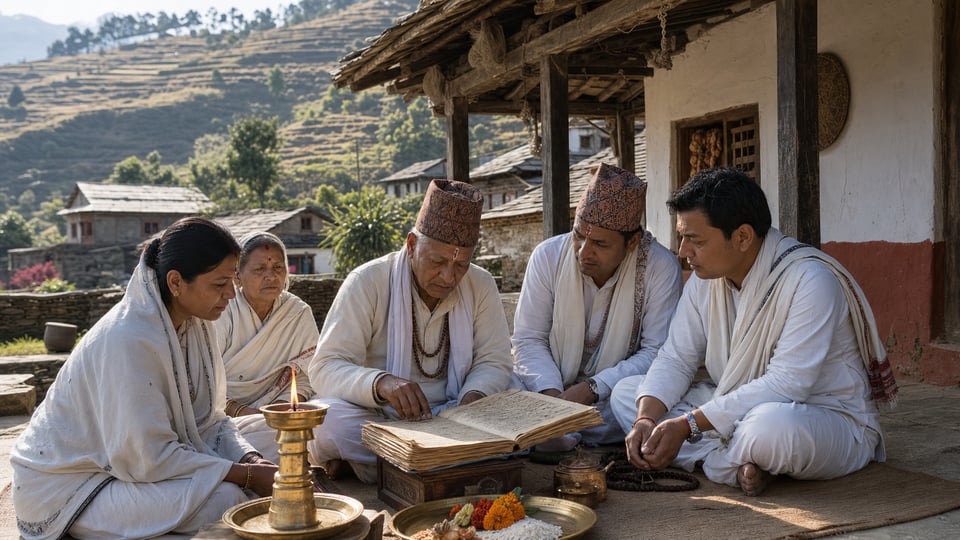
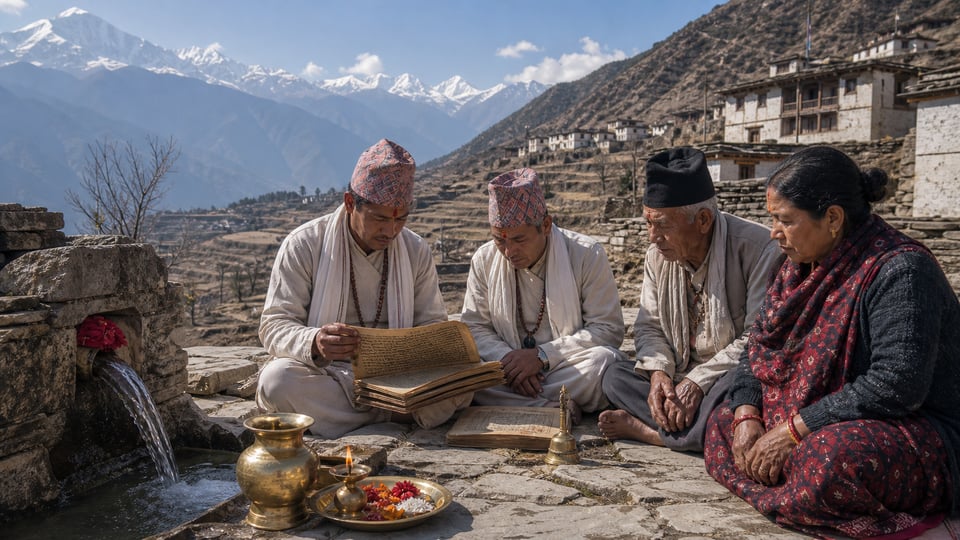
"Your Surname is Just the Cover of Your Family History. Your Kul Devata is the Map Inside." Most Nepali families can tell you their Thar and some know their Gotra too. But fewer can answer a critical question: Who is our Kul Devata?
18 June 2026 · 12 min read
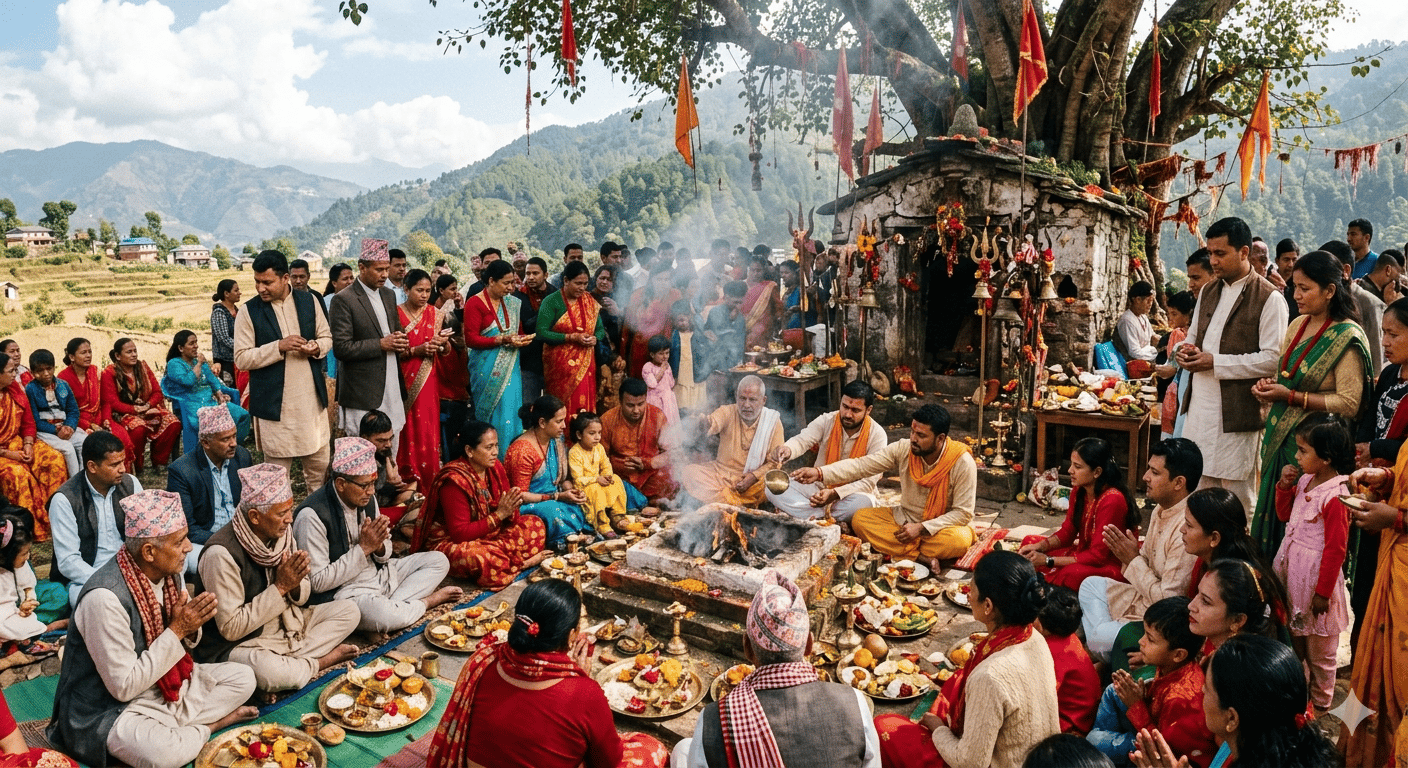
Many Nepali families know their surname.
Some know their gotra.
Fewer know their ancestral village.
And even fewer can clearly answer one question:
Who is our kul devata?
For some families, the answer comes quickly: Bindabasini, Bhairav, Masta, Rudra, Bhagwati, Baraha, Gauri Shankar, a local gram devata, a kuldevi, or a deity known only within that branch.
For others, the answer is uncertain. Someone remembers a shrine. Someone remembers a puja date. Someone remembers that the family used to gather every few years. Someone remembers the name of a hill, a river, a temple, a stone, a goth, or a village where the old worship happened.
That is not just religious information.
It is family history.
Your kul devata can tell you where your family remembered its origin, which branch you may belong to, what values your ancestors carried, where your relatives gathered, and what your vansawali may still be missing.
In Bamsawali language, kul devata is not only a ritual field. It is a clue inside the family tree.
The word kul devata is usually understood as the deity of a family, clan, lineage, or kul.
Different regions and communities use different words: kul devata, kuldevi, kuladevata, kuldeuta, kulko deuta, ishta devata, gram devata, goth devata, Masta, Bhairav, Bhagwati, Devi, Rudra, Baraha, and many local names.
These words are not always interchangeable.
Kul devata / kuldevi usually points to a deity remembered by a family or lineage.
Ishta devata often means a chosen or personally worshipped deity.
Gram devata points toward a village or place deity.
Goth devata may connect with cattle, household livelihood, and agricultural memory.
Rashtra devata or national deity may appear in some lineage records as a broader sacred reference.
In real families, these categories can overlap. A deity may be both local and lineage-based. A family may worship a kuldevi along with a gram devata. A branch may have one remembered kul devata while another branch preserves an additional local deity after migration.
That is why kul devata should be recorded carefully, not reduced to a single word copied from the internet.
When a family says, "Our kuldevi is Bindabasini," that statement may contain several hidden clues.
It may point to:
a place where the family once lived
a temple or shrine connected with migration
a kul puja gathering site
a branch that moved from one district to another
a ritual calendar
a family priestly tradition
a link to other surnames or sagotri families
an older vansawali that mentioned the deity
The name of the kul devata alone is not enough. The story around the name matters.
Ask:
Where is the shrine? Who first told the family about this deity? Which branch performs the puja? Which tithi is observed? Do all branches agree? Did the deity name change after migration? Is this deity linked with a specific village, hill, river, goth, or temple?
Those answers turn a ritual name into genealogy.
If you are building a digital Bansawali, your kul devata can reveal at least seven parts of your family story.
Gotra tells one kind of root. Thar tells another. Kul devata tells a third.
Gotra connects the family to a remembered rishi-lineage. Thar may preserve a place, title, occupation, or migration identity. Kul devata shows the living devotional center of the family.
That devotional center can be very old.
In traditional family records, it often appears beside gotra, pravara, veda, kuldevi, kuldevata, aradhyadeva, gram devata, and place of origin. That pattern is visible in the Neupane material in this workspace: the lineage records Kaudinya gotra, Vashishtha-Kaudinya-Mitravaruna pravara, Bindabasini as kuldevi, Ekadasha Rudra as kuldevata, Gauri Shankar as aradhyadeva, Pashupatinath as national deity, and Dhaulagoh of Jumla as the surname-origin place.
That is a powerful structure.
It does not only say, "We worship this deity."
It says, "This is how our family understands its spiritual, geographical, and ancestral identity."
Sometimes the fastest way to trace a family is not to start with a surname. It is to ask where the kul puja happens.
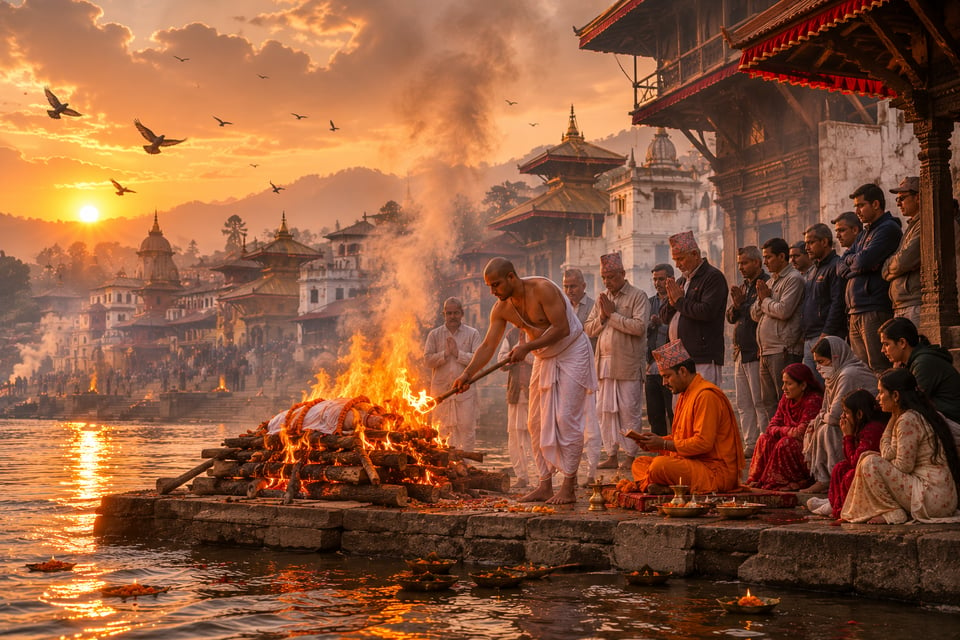
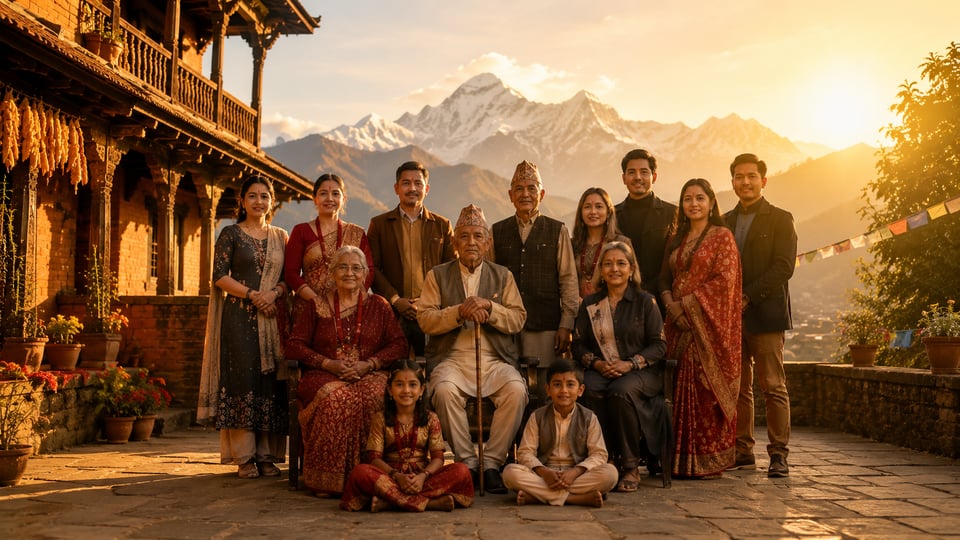
The old shrine may be in the ancestral village. The puja may still be organized by a branch that never migrated. The land around the deity may preserve the name of the old settlement. The family may return to that place every few years, even when most descendants now live in Kathmandu, Pokhara, Butwal, Chitwan, Australia, the UK, or the US.
For a scattered family, that place becomes an anchor.
In a printed vansawali, the ancestral place may appear as one line. In living practice, kul puja may preserve the same place through repeated return.
So if your family has forgotten the exact migration route, begin with the deity site:
Which district is it in?
Which municipality or old VDC?
Is the shrine near an old house, goth, field, river, forest, or hill?
Which families gather there?
Who has the key, record, or responsibility?
The answer can rebuild a lost branch of the family map.
One surname can contain many branches.
Some branches share the same gotra but preserve different local practices. Some remember different kul puja dates. Some migrated early and adopted a local deity in a new village while still remembering the older deity. Some branches argue because one side remembers the kuldevi and another remembers the gram devata.
This does not always mean someone is wrong.
It may mean the family history has layers.
For example, Kafle material in this workspace shows how one surname can preserve Shandilya gotra, migration memories, Saji-Basi branch distinctions, goth-dhup practice, and cattle-centered ritual memory. The ritual details do not stand outside the family story. They help identify how different branches lived, worshipped, and remembered their household world.
When you record kul devata, do not flatten all branches into one neat answer.
Record branch-level differences.
That is how a digital Bamsawali becomes more accurate than a simple surname page.
Kul devata can show where a family moved.
A family may have:
an older kuldevi in the place of origin
a gram devata in a later settlement
a goth devata connected with agricultural life
a shrine adopted after receiving land, birta, or priestly duty
a deity associated with a royal court, local ruler, or temple service
These layers are not random. They often follow movement.
If your family moved from Karnali to the Kathmandu Valley, from Bajhang to Kaski, from Jumla to Bhaktapur, from Gulmi to Rupandehi, or from Nepal to the diaspora, the worship pattern may still carry the earlier route.
That is why Bamsawali should record not just "kul devata: X," but:
old deity site
current worship site
branch responsible for puja
migration note
source person
date or generation when the change happened
Migration becomes visible when ritual memory is recorded properly.
Kul devata also tells us what a family honored.
Some lineages emphasize Shakti worship. Some emphasize Shiva, Rudra, Bhairav, Masta, Baraha, Narayan, Bhagwati, local protective deities, ancestors, or nature-linked sacred places.
These traditions can show what the family associated with protection, prosperity, learning, agriculture, discipline, courage, purity, fertility, justice, land, or household continuity.
The Neupane source material gives one striking example. It says the lineage's kul tradition is connected with Shakti worship, including Bindabasini and Trishakti, while also remembering Ekadasha Rudra and Gauri Shankar. It also explains sacrifice symbolically as giving up lower tendencies rather than treating ritual as mere performance.
Whether every branch follows that exact interpretation is a separate question. But the lesson is important:
A kul tradition often preserves values, not only ritual steps.
A family that remembers its kul puja date remembers time differently.
The date may be annual, multi-year, seasonal, linked to a lunar tithi, or tied to a local calendar moment. The Neupane source material mentions Vaisakh Shukla Purnima and Marga Shukla Purnima as important puja dates in that tradition.
Those dates matter for a digital family platform.
Why?
Because a family app should not only show dead records. It should support living heritage.
In the Bamsawali product notes, one future workflow is a feed where admins can push notices such as kul puja announcements, and users can react or comment. That is exactly where kul devata data becomes practical:
announce kul puja dates
notify branches
share location
collect old photos
record attendance
add newly learned branch information
update the family tree after the gathering
The ritual calendar becomes a genealogy update cycle.
Sometimes the most valuable thing your kul devata gives you is not an answer.
It gives you a better question.
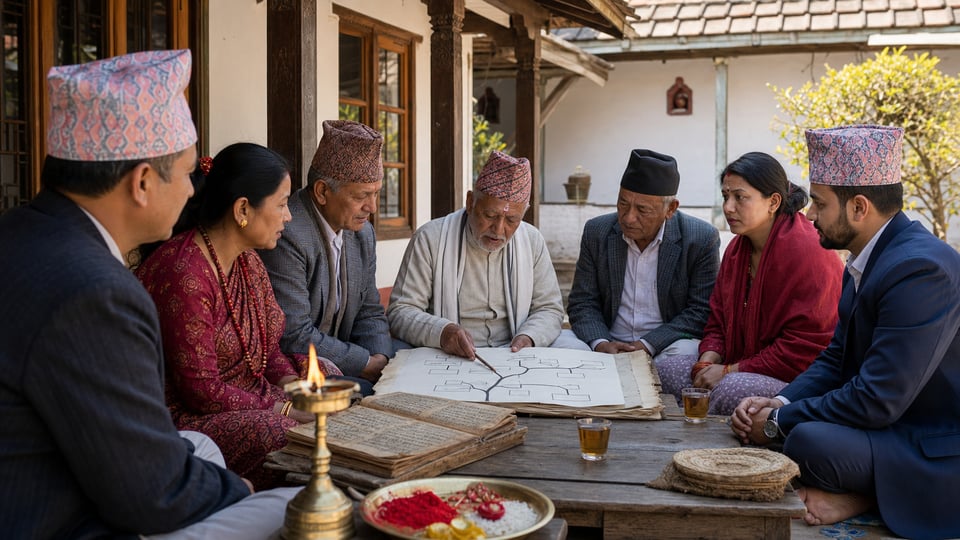
If two branches claim different kuldevi names, ask why.
If the family knows the deity but not the place, ask where the puja originally happened.
If the family knows the puja date but not the gotra, ask which priest or elder has the old sankalpa record.
If one branch has stopped attending kul puja, ask when the separation happened.
If a diaspora branch only knows the surname, ask elders to record the deity, puja place, and branch before the memory disappears.
Good vansawali work does not pretend everything is already settled.
It records the questions honestly.
Imagine this.
A child growing up in Australia asks, "Why do we go to Nepal every few years for kul puja?"
One answer is: "Because it is our tradition."
That answer is true, but too small.
A better answer is:
"Because our family comes from that place. Our ancestors remembered that deity. Our branches gather there. The names in our vansawali are connected to that shrine. When we go there, we are not only doing puja. We are meeting the family tree in real life."
That is the difference.
Kul devata turns family history from a list of names into a living memory.
It gives children a place, a story, a sound, a route, a gathering, a ritual, and a reason to ask one more question.
When you add kul devata information to a digital family tree, avoid vague entries.
Do not write only "Devi" or "Shiva" if the family knows more.
Record details like this:
Kul devata name: e.g., Ekadasha Rudra, Masta, Bhairav, Baraha, Narayan, local deity name.
Kuldevi name: e.g., Bindabasini, Bhagwati, Kalika, Malika, or branch-specific name.
Associated deities: ishta devata, gram devata, goth devata, aradhyadeva, if known.
Puja date: lunar tithi, month, frequency, and local calendar note.
Puja place: old village, current shrine, district, GPS/map link if available.
Responsible branch: which branch or committee organizes the puja.
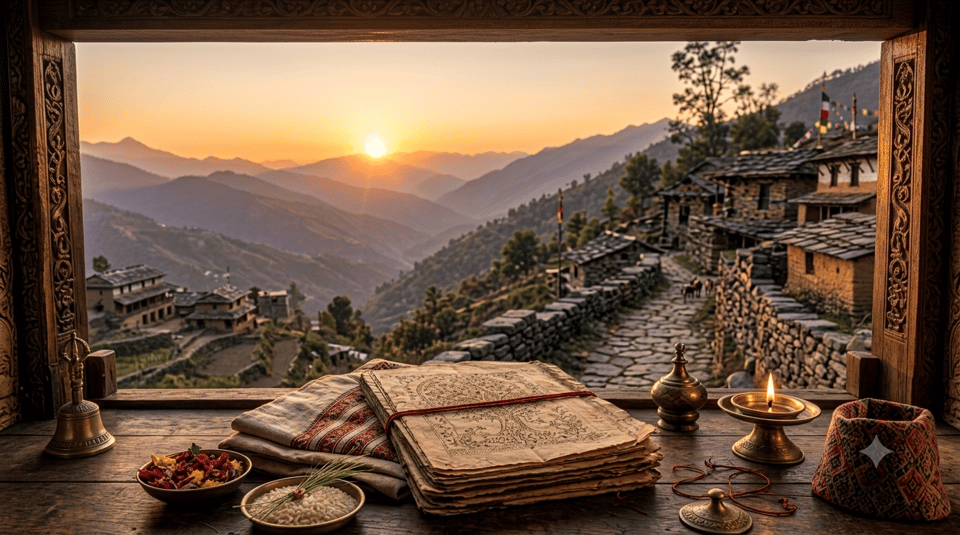
Source: elder, kul purohit, old book, printed vansawali, tamrapatra, temple record, or family notebook.
Uncertainty: disagreements between branches or details needing verification.
Photos/documents: old shrine photos, puja invitations, printed notices, handwritten pages.
Migration note: how the deity site connects with the family's movement.
This is how kul devata becomes useful for future generations.
Before the memory fades, sit with the elders and ask:
Who is our kul devata?
Who is our kuldevi?
Do we also have an ishta devata, gram devata, or goth devata?
Where is the old kul puja place?
Which branch organizes the puja?
What date or tithi is followed?
What is our gotra and pravara?
Which surnames are considered connected to our kul?
Did our family migrate from another district?
Are there old notebooks, vansawali books, or sankalpa records?
Do all branches agree on the same deity?
What should we write down today so our children do not have to guess tomorrow?
The answers may not be perfect.
That is fine.
Record what is known. Mark what is uncertain. Add who said it. Add when they said it. Add what source they used.
That is how serious family history is built.
Most genealogy tools can record names and relationships.
Nepali families need more.
A Nepali family tree often needs to preserve:
gotra
pravara
kul devata
kuldevi
ancestral village
migration route
branch name
maiti and sasurali connections
kul puja dates
source notes from elders
samaj or kul samiti verification
That is why Bamsawali is not just a family tree maker.
It is a digital vansawali system for Nepali families and communities.
The goal is simple: make sure the next generation does not inherit only a surname, but also the story behind it.
Kul devata means the deity remembered by a family, clan, lineage, or kul. In some families the deity may be called kuldevi, kuladevata, kulko deuta, Masta, Bhairav, Bhagwati, Rudra, Baraha, or by a local name.
No. Gotra is a lineage identity connected with a remembered rishi tradition. Kul devata is the family or clan deity remembered in ritual life. Both can help preserve vansawali, but they are different fields.
Yes. Branches may differ because of migration, local settlement, priestly tradition, regional custom, or branch-level history. That is why family-level verification is important.
Yes. Many families remember both a male deity and a goddess, or a group of associated deities. Some traditions also include ishta devata, gram devata, goth devata, Masta, Bhairav, or local protective deities.
Start with elders, old vansawali books, kul puja invitations, family priests where that tradition exists, shrine locations, and relatives from older branches. Do not rely only on generic internet lists.
Because kul devata can preserve clues about origin, migration, branch identity, ritual calendar, family values, and community connection. If it is not recorded, the next generation may know the surname but lose the story.
This article combines Bamsawali workspace material with external historical and reference sources. Local examples come from Paudel, Kafle, and Neupane drafts and the source notes under history of gotras. External references are used for broader context, not to override family-specific traditions.
Wisdom Library, definition and Sanskrit usage of Kuladevata: https://www.wisdomlib.org/definition/kuladevata
Digital Dictionaries of South Asia, Nepali dictionary entry for kuladevata: https://dsal.uchicago.edu/cgi-bin/app/turner_query.py?qs=kuladevat%C4%81&searchhws=yes
Skanda Purana reference to gotra, kula, and deity questions: https://www.wisdomlib.org/hinduism/book/the-skanda-purana/d/doc371736.html
Garga Samhita reference to worship of the family's deity in a marriage context: https://www.wisdomlib.org/hinduism/book/garga-samhita-english/d/doc1124425.html
Shiva Purana reference to Parvati worshipping her family's deity: https://www.wisdomlib.org/hinduism/book/shiva-purana-english/d/doc226052.html
Research on Bahun-Chhetri kul puja and clan ritual debates in Nepal:
Gotra
22 July 2026 · 13 min read
Gotra
21 July 2026 · 9 min read
Gotra
19 June 2026 · 7 min read
Gotra
18 June 2026 · 5 min read
Surname History
18 June 2026 · 11 min read
Surname History
17 June 2026 · 13 min read