Trace the rich history of the Dahal surname in Nepal. Learn how a land grant in Dailekh transformed the ancient Bhatta lineage into the Dahal clan, the royal secret behind the "Alam" flag on their roofs, and how their branches reached across the globe.
18 June 2026 · 11 min read
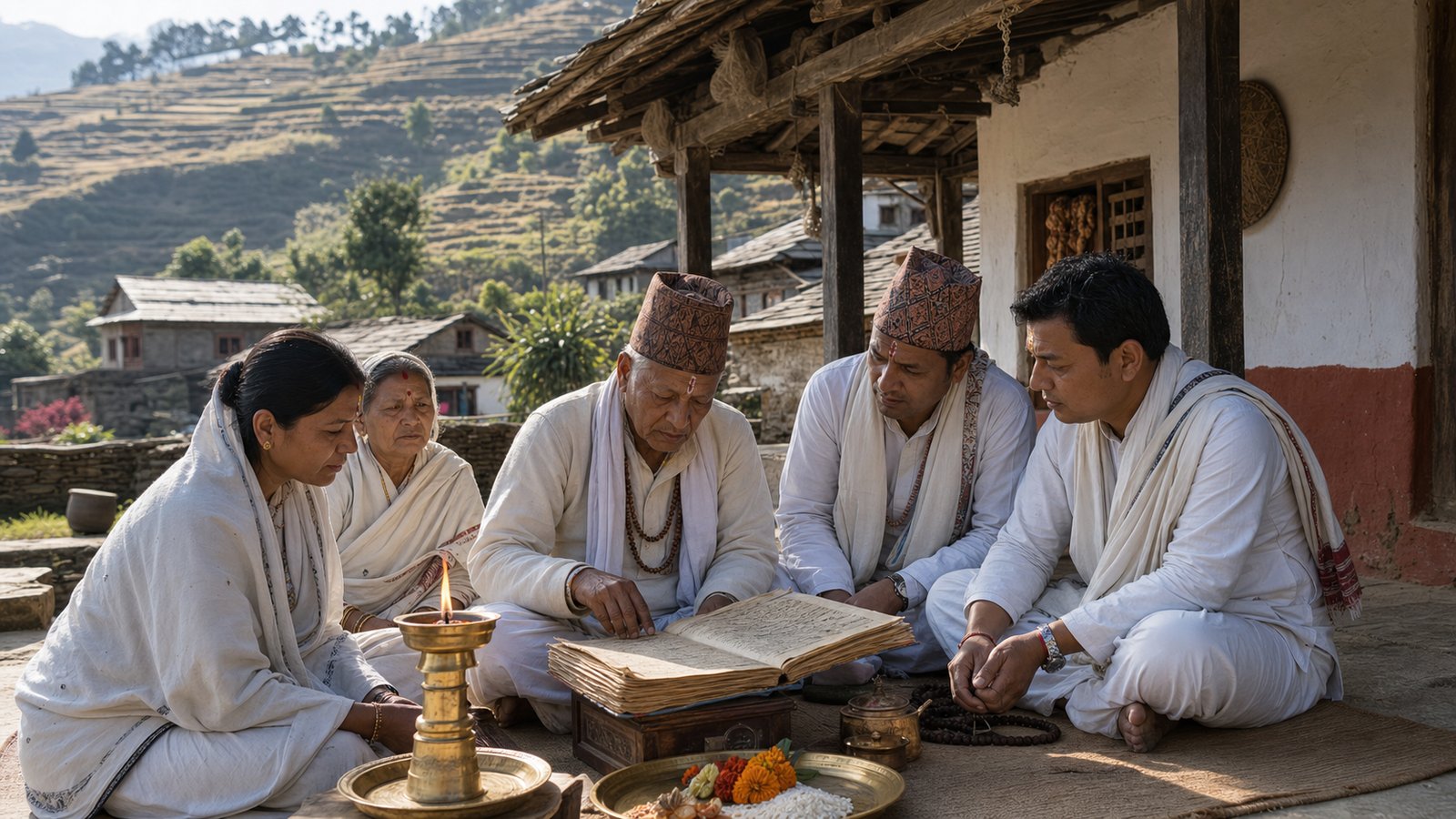
Did you know that the flag placed on the roof of a Dahal home is not a simple streamer, but a symbol of a lost royal kingdom?
We write our names every day. We introduce ourselves by our surname. But many of us rarely get the chance to ask a deeper question: where did this surname come from, how was it formed, and what kind of journey did it travel before reaching us?
In this article, we follow that question through the History of the Dahal surname. This is not only the story of a family name. It is a story of flight and survival, of a royal standard hoisted on a household roof, and of a single family branch that grew to encompass some of the most prominent dynasties in Nepal's history, including the Lamsals, Kunwars, and Ranas.
In Bamsawali's "Surname Journey" series, we are exploring the roots of Nepali surnames: where they came from, how they formed, and what kinds of ancestors, places, and memories they carry. This journey is about the Dahal surname.
One thing should be said gently at the beginning. History is not always a perfectly fixed science. Different genealogies and scholars have offered different accounts of how the Dahal surname originated, and it is not possible to declare any single one as the only truth. Based on the genealogies and references available, we are placing all of these accounts before you with respect and care.
Let us begin from the roots.
When we trace the spiritual and lineage roots of the Dahal surname, we arrive at the Vatsa gotra.
In ancient times, human society was classified gotrally — meaning families were identified by the names of the great Vedic rishis from whom they descended or whose teachings they followed. The descendants of Vatsa Rishi belong to the Vatsa gotra. Before they were known as Dahal, the ancestors of this lineage were known by the title Bhatta.
For Vatsa gotri Dahals, the lineage is remembered through the Pancha Pravara (five founding sages):
Bhrigu
Chyavana
Apnavana (also spelled Apnuvan)
Aurva
Jamadagni
To be connected with a gotra of five such illustrious sages is a matter of quiet pride. In our culture, gotra represents the unbroken thread that connects us to the origins of knowledge and spiritual practice.
Around the third century of the Bikram era (Vikram Sambat), the gotra-based social classification began transitioning into a surname-based (tharvachi) society. Surnames began to emerge from the lands, provinces, or villages where families established their settlements. The historical transition shows that the Kharel surname (arising from the Khari province) was among the very first of these land-based surnames. Culturally, it is understood that the Dahal surname was the first of the land-associated surnames to follow, arising from the birta lands granted to the Bhatta ancestors.
How did the transition from Bhatta to Dahal actually occur?
According to genealogical records, the Bhatta descendants of Vatsa Rishi received two key land grants (birta): Budhagaon (the old village) and Dahagaon (the lake/pond village) in Dailekh. The branch of the family that settled in Dahagaon came to be known as Dahal.
This geographical origin makes Dahal a classic land-based (bhoomivachi) surname. The name is rooted in the soil and water of Dahagaon, where the Bhatta ancestors first dug their fields and built their homes.
At the same time, the lineage was branching in other ways:
Shivadas Bhatta, a descendant of the original ancestor Dasu Bhatta, received a land grant at Rupavesi Tar. His descendants came to be called Dahal Rupakheti (or simply Rupakheti).
Another descendant received a birta at Lamsu. The descendants of this ancestor, known as Lumsali Baje, became the Lamsal family.
In this way, Dahal, Rupakheti, and Lamsal emerged as brother branches of the same Vatsa gotri root.
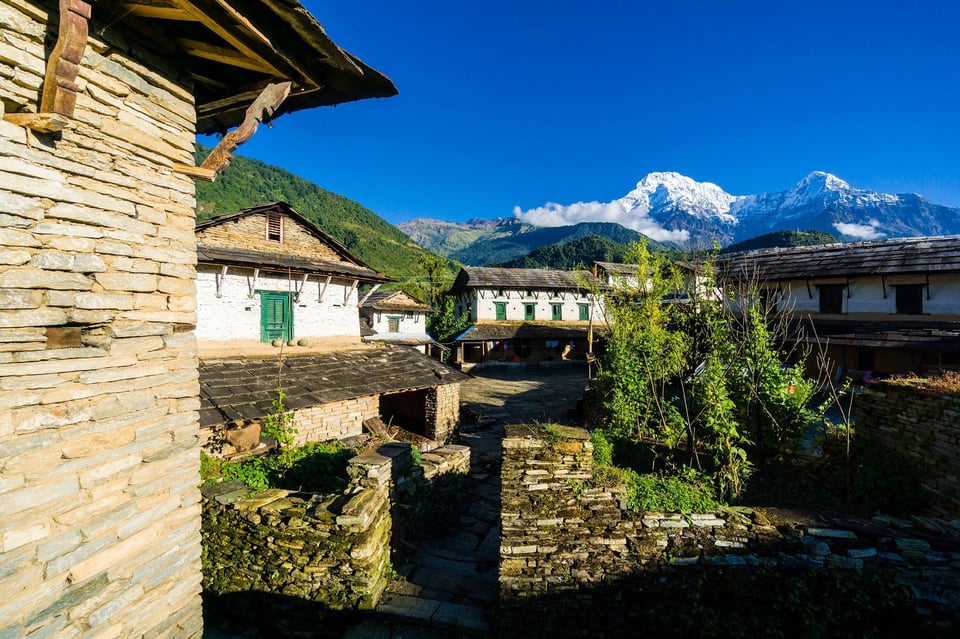
One of the most unique and beautiful traditions of the Dahal clan is the placement of a flag, known as the Alam, on the roof (dhuri) of their homes. To understand why this is done, we must go back to the story of the original ancestor, Dasu Bhatta.
According to clan history, Dasu Bhatta was forced to flee the state of Bad Bihar (बढ बिहार) due to rising conflict and political instability. He traveled across the borders and entered Bilaspur (in present-day Dailekh district, Nepal). Along with his family, he brought two precious things from his homeland: the royal flag (Alam) of his state and his family's Ista Devi (guardian goddess), Vindhyavasini.
Upon entering Nepal, Dasu Bhatta established the temple of Vindhyavasini in Pokhara. However, he was deeply troubled about what to do with the royal flag. Throwing it away was unthinkable, as it represented the honor and memory of the state they had ruled. Yet, keeping it raised in a land where they no longer held a kingdom seemed out of place.
Seeing her husband's anxiety, the queen gave him wise advice:
"My Lord, you no longer have a physical kingdom or subjects. But this house is now your kingdom. Therefore, establish this royal flag on the roof of our home."
Dasu Bhatta found peace in her words and hoisted the flag the Alam on the roof ridge of his house.
Today, many observers mistake the flag on a Dahal home for a standard dhajo (a simple religious streamer). However, clan tradition is clear: this is not a dhajo, but the Alam — the direct symbol of a royal flag.
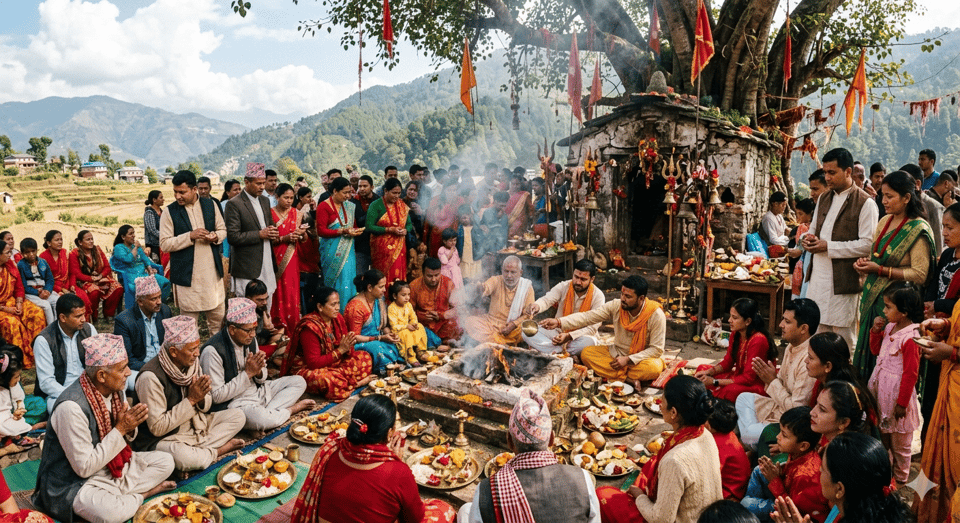
In the old days, when the original Alam became worn out, the family would offer new flags and streamers (dhwaja pataka) during the Kul Puja and worship of the Ista Devi, and hoist a fresh Alam. After Dasu Bhatta passed away, this practice continued as a sacred tradition. For modern Dahal families, the Alam on the roof is a proud reminder of their royal lineage, their journey of migration, and the domestic kingdom established by their ancestors.
The story of the Dahal lineage takes an extraordinary historical turn through a marriage that occurred generations ago.
According to traditional accounts, a son from the Dahal clan entered into a marriage with a girl from the Magar community. In the strict social conventions of that era, an inter-caste marriage was highly controversial. The community declared that such a groom was not a Su-war (a good/noble groom) but a Ku-war (a bad/unsuitable groom).
Over time, this descriptive term Ku-war evolved into the surname Kunwar.
Years later, Bal Narsingh Kunwar, a descendant of this very line, rose to prominence in the court of Kathmandu. His son, Jung Bahadur Kunwar, seized power during the historic Kot Massacre (Kot Parva) of B.S. 1903 (1846 CE) and became the Prime Minister of Nepal. He was subsequently awarded the title of Rana.
Thus, the Kunwar and Rana dynasties of Nepal share their ultimate biological and gotra roots with the Vatsa gotri Dahal lineage.
Among the Dahal clan, there is a distinct group known as the Budha Dahal (बुढा दाहाल). This branch has its own story of survival.
In the fifth generation of the lineage, an ancestor named Tularam suffered a terrible tragedy: his entire family and all his descendants passed away, leaving his line completely wiped out. In his advanced, elderly years, Tularam remarried in a desperate bid to save his family line from extinction.
The children born from this late-life marriage were affectionately called the descendants of the "old man" (Budha) Dahal. Today, the Budha Dahals carry this name as a badge of resilience a testimony to a lineage that refused to end.
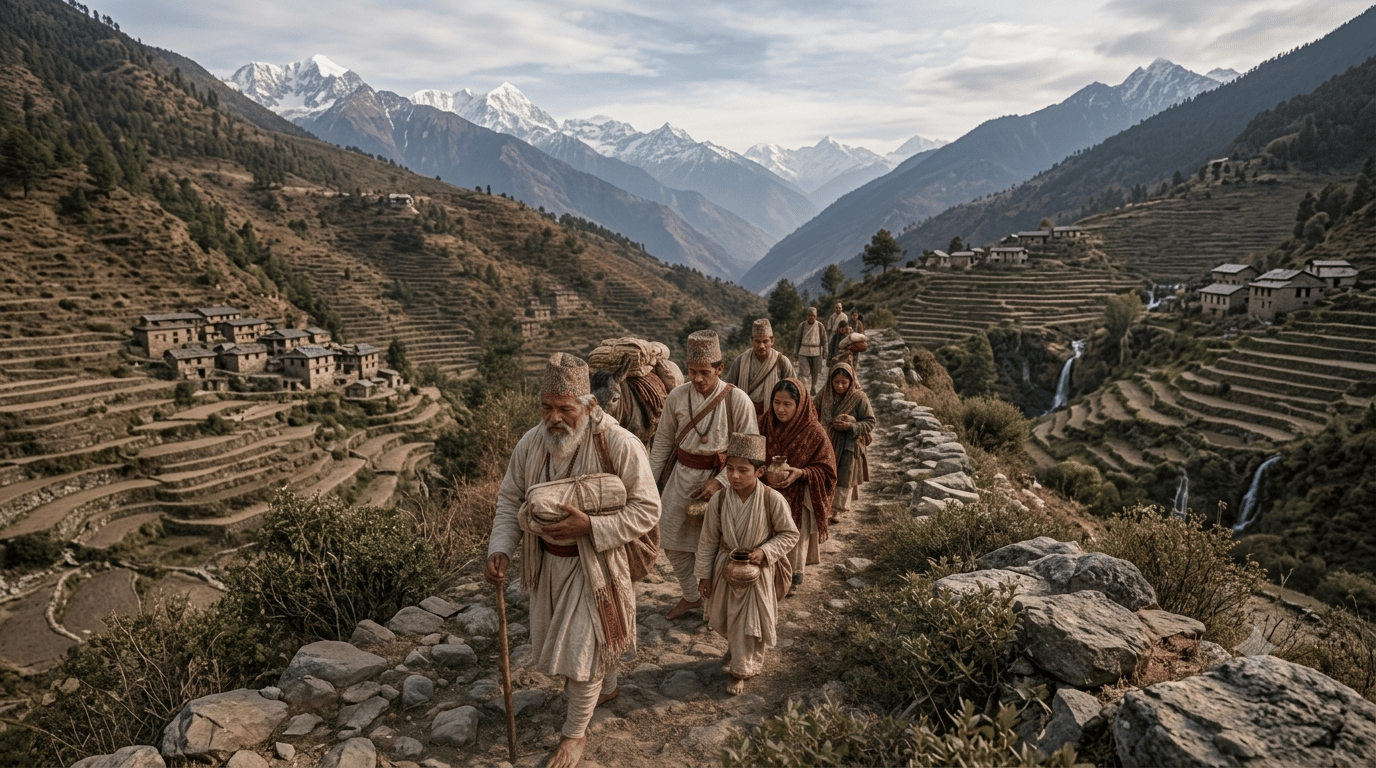
Where did the Dahal clan travel?
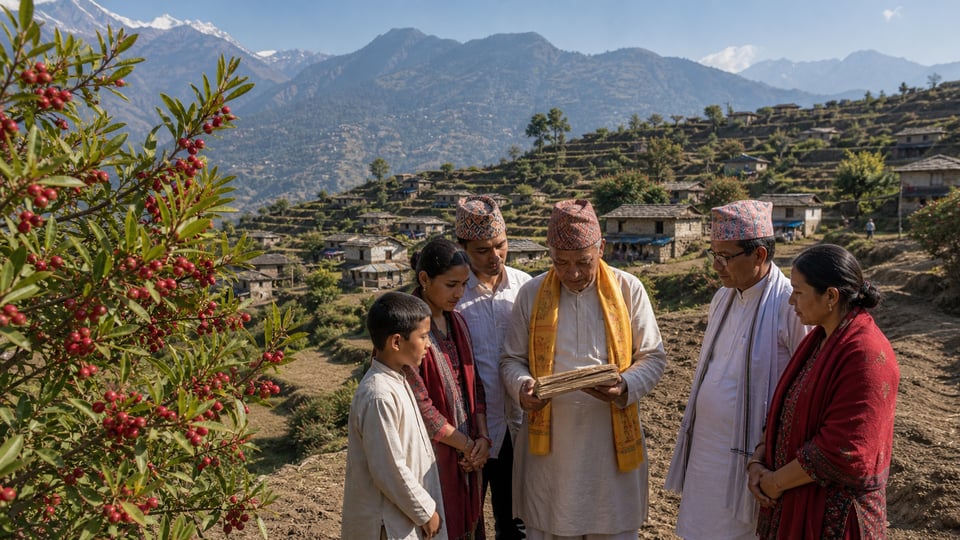
Historical and genealogical research shows that the earliest ancestral homeland of the Dahal surname in Nepal was Dahagaon (currently in Gauri VDC) and Dullu in Dailekh district. From this Karnali cradle, the clan migrated eastward across the hills of Nepal and beyond:
Central Nepal: Dhading, Jhirling-Jhiltung of Nuwakot, Kathmandu (Gothatar), Nala of Kavrepalanchok, and Bungnam.
Eastern Nepal: Jhang Jholi of Sindhuli, Rampur and Chanaute of Okhaldhunga, Kulagaun, Bula, Khamtel, Lamisoti, Sanwa, Likuwa, and Khoksel of Khotang, Madhibirta, Sibuwa, Syabun, and Pangtha of Sankhuwasabha, Khewang of Taplejung, Labri and Lubunga of Tehrathum, and Ilam.
Beyond Nepal: Sikkim, Kalimpong, Betiya (Bihar), Assam, and Burma (Myanmar).
Global Diaspora: Today, Dahal families have established homes in the United States, the United Kingdom, Denmark, and various other countries across the globe.
What began as a single settlement in Dailekh has now become a worldwide network of families.
To preserve their lineage identity, Dahal families observe specific cultural practices and worship their unique pantheon of deities:
Gotra: Vatsa
Pravara (Pancha Pravara): Bhrigu, Chyavana, Apnavana, Aurva, Jamadagni
Sahagotri (Fellow Gotras): Rana, Lamsal, Kunwar, Jha, and others who share the Vatsa gotra
Chief Deities: Shiva (Main Deity) and Vindhyavasini (Aradhya Devi)
Kul Devata (Clan Deities): Brahmavetal, Agnivetal, Balamasta, Basantamala, and Mahantamala
Milk Abstinence (दूध बार्ने): Abstaining from consuming milk or milk products on Purnima (full moon) days. If the lunar date is split or shifted, the abstinence is observed on the day of the moon's rise (udaya).
Hoisting the Alam: Hoisting the new Alam on the roof of the house on Chandi Purnima (Baisakh Purnima).
The Kul Lamp: Lighting the sacred clan lamp (diyo) in the home on every Purnima night.
Alam during Rituals: Hoisting the Alam on the roof ridge whenever a major yajna (sacred fire ritual) is performed.
Goth-dhup & Diwali: Performing goth-dhup (cattle shed worship) during the Ubhauli and Udhauli seasons, and celebrating the grand Diwali (Kul Puja) to honor the ancestors.
The story of the Dahal surname from the flight of Dasu Bhatta to the hoisting of the Alam has reached us because generations of ancestors took the time to write, remember, and speak these stories.
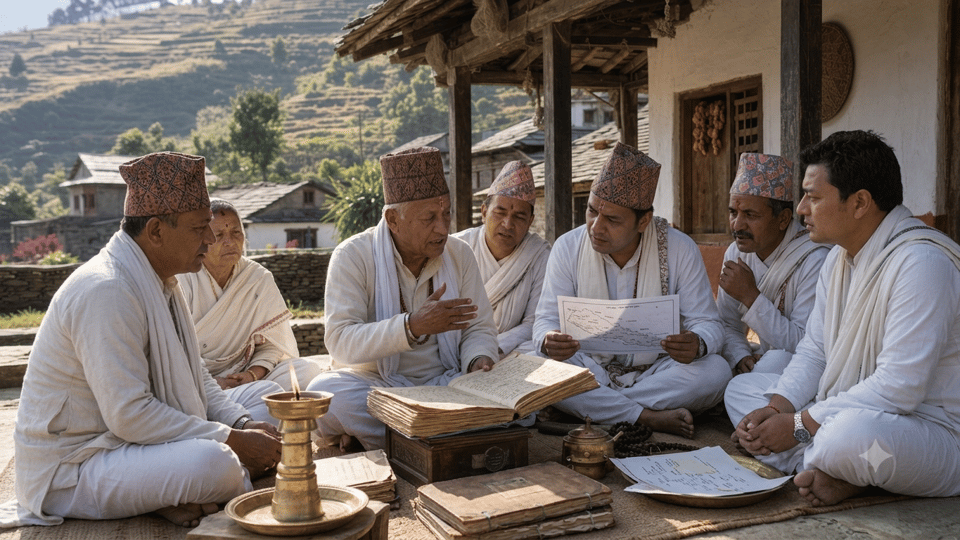
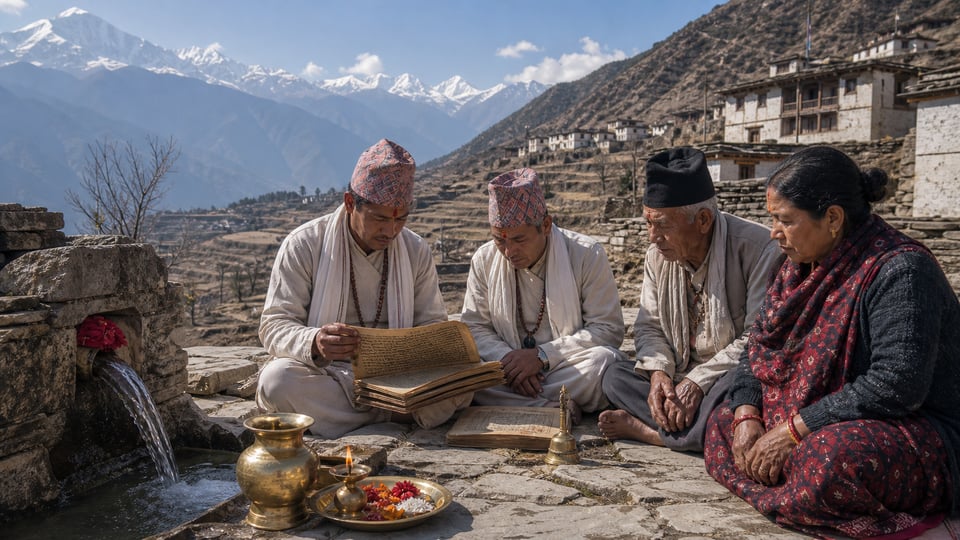
But today, our families are highly mobile. We migrate to cities and cross oceans. The old handwritten family ledgers (vanshawali) are fragile and scattered. The memories held by our grandparents the names of old villages in Dailekh, the migration routes, the stories of the vetalas will disappear if they are not recorded.
Take Action: Sit with the elders in your family. Ask them: where did our ancestors come from? Who is our kuldevata? What is the story of our Alam? And whatever you learn, write it down. Today's grandparents are living links in a story that may be hundreds of years old; the chance to hear them will not remain forever.
At Bamsawali, we are building tools to prevent this loss. We help you digitize your family trees, map your ancestral migrations, and store your family stories securely so that future generations can learn about their roots with a single click.
Share this article with your family, and sit with your elders to write down your family branch's unique story.
Your surname carries a history. Let us write it together.
The Dahal surname is a land-based (bhoomivachi) surname. The Bhatta ancestors of Vatsa gotra settled in Dahagaon of Dailekh after receiving a land grant (birta). Over time, the residents of Dahagaon came to be called Dahal.
The flag on the roof is called the Alam. It is a symbol of the royal flag of the state ruled by the ancestor Dasu Bhatta in Bad Bihar. When they fled to Nepal, his queen advised him to raise the flag on their house roof, declaring the home as their new kingdom.
According to some genealogical traditions, Paudel and Dahal share a common ancestor both descending from sons of Shrinanda. However, they developed distinct gotra identities and lineage traditions over time, and are today treated as separate surnames.
As fellow sagotris sharing the Vatsa gotra, surnames such as Lamsal, Kunwar, Rana, and Jha are closely related to the Dahal lineage. Lamsals and Rupakhetis share direct descent from the same ancestor, Dasu Bhatta.
The original ancestor is considered to be Dasu Bhatta, who migrated from Bad Bihar to Bilaspur (Dailekh) carrying the royal flag and the family deity Vindhyavasini.
Budha Dahal refers to the branch of the family descended from Tularam (fifth generation). After his entire lineage was wiped out, he remarried in his old age, and his children were called the descendants of the "old man" (Budha) Dahal.
A son from the Dahal clan married a woman from the Magar community, and their descendants were called Kunwar a term that evolved from the social label given to that marriage. Jung Bahadur Kunwar, a descendant of that line, later became Prime Minister and was awarded the title Rana, connecting both dynasties to the same Vatsa gotri Dahal root.
See its gotra, kuldevata, origin and the other surnames that share its gotra.
Gotra
18 June 2026 · 12 min read
Surname History
23 June 2026 · 11 min read
Surname History
Surname History
17 June 2026 · 13 min read
Surname History
17 June 2026 · 14 min read
Gotra
22 July 2026 · 13 min read