A sourced guide to Damai and Pariyar origin traditions, occupational knowledge, the 1854 Muluki Ain, and the recovery of inclusive family histories.
19 June 2026 · 7 min read
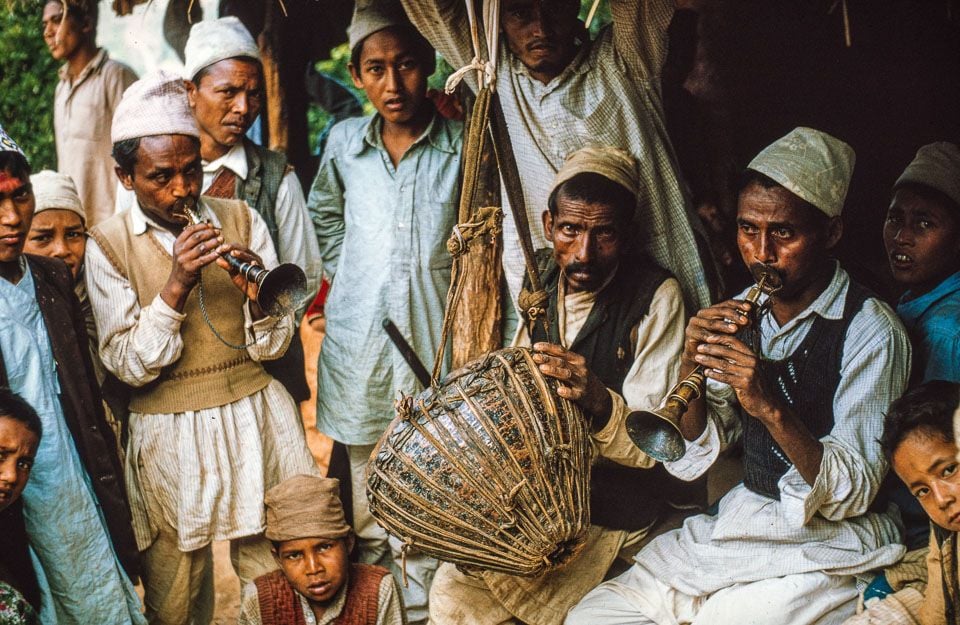
Can playing the damaha change the caste of a person's descendants?
Can one story about eating an animal killed in a forest fire explain the origin of an entire community?
These questions make striking headlines. They do not produce simple historical answers.
Ratopati's article on Damai genealogy records several origin traditions associated with Damai and Pariyar branches, occupations, and caste identity. These narratives deserve preservation. But they should not be presented as the proven origin of an entire community without identifying the branch, place, date, and source.
The purpose of Damai and Pariyar genealogy is not to prove that someone once "lost caste." It is to recover the names, women, places, skills, migrations, and contributions that caste hierarchy and selective recordkeeping pushed out of written history.
Many South Asian caste-origin narratives follow a familiar pattern:
an ancestor performed a prohibited act,
a royal order was disobeyed,
a rule about food or touch was broken,
a hereditary occupation was adopted,
or a conflict led to social demotion.
Such stories explain present social status through a dramatic event in the past. Some preserve a memory of humiliation. Others try to restore status by arguing that the group once belonged to a higher rank.
Repetition, however, is not the same as documentary proof.
Ask:
Where is this story told?
Which branch accepts it?
What is its earliest written appearance?
Do other branches tell a different story?
Does it match land, legal, temple, or family records?
This method respects oral history without turning it into unsupported fact.
The name "Damai" is often explained through the damaha and through tailoring and ceremonial music. "Darji" is an occupational term. "Pariyar" is widely used today as a surname and community identity. Other surnames, subgroups, and local identities also exist.
These categories should not be collapsed:
a community name expresses social identity,
a surname may identify a family or branch,
an occupation can change across generations,
a genealogy records actual people and relationships.
An ancestor's work as a musician or tailor does not, by itself, establish the complete ancestry of the family.
Madhusudan Subedi's study of caste in Nepal, available in the local knowledge base, shows how social hierarchy was institutionalized through state law.
The 1854 Muluki Ain placed Nepal's population into legal caste categories. It listed Damai as tailors and musicians within the discriminatory category historically translated as "water-unacceptable and requiring purification after touch."
That language is unacceptable today. As a historical record, however, it demonstrates two important facts:
Caste discrimination was not merely a private attitude; state law reinforced it.
Diverse family histories were compressed into one occupation and one position in a hierarchy.
Subedi notes that the replacement of the old code in 1963 ended legal recognition of caste-based discriminatory rules. Social behavior and inherited stigma did not disappear at the same speed.
Writing Damai and Pariyar family history is therefore more than a private genealogy project. It also restores complexity to identities once reduced by state classification.
Older descriptions frequently reduce Damai people to "tailors and musicians." Both occupations contain deep technical and cultural knowledge.
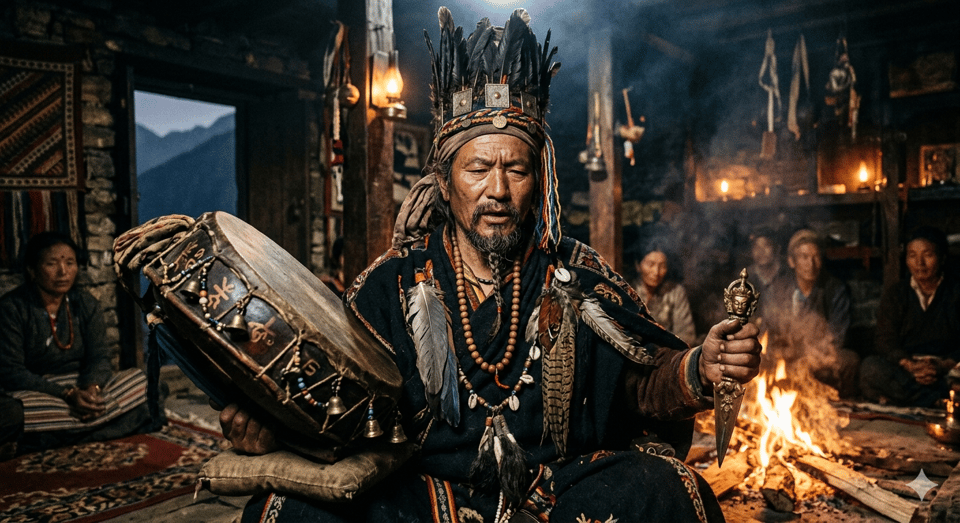
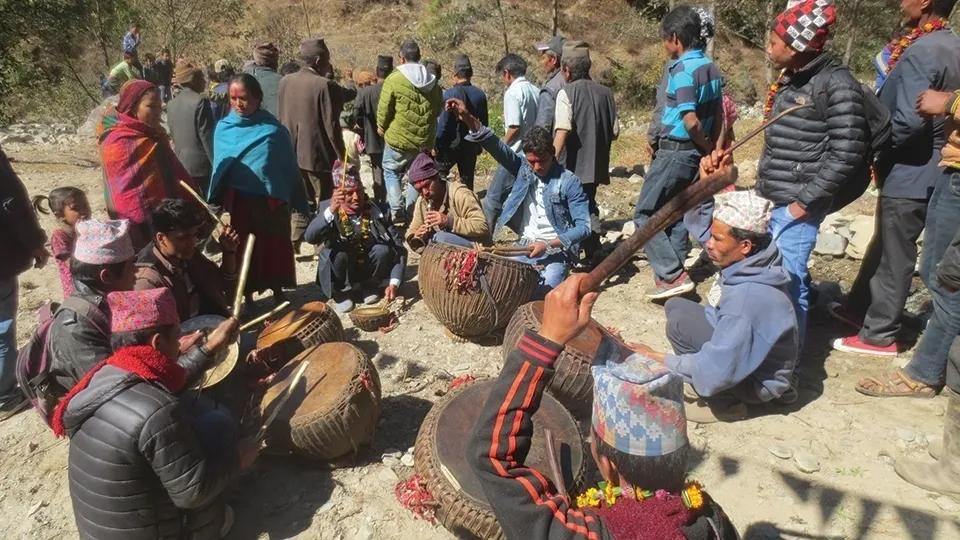
The damaha, narsingha, sanai, tyamko, and local panche baja traditions are not simply entertainment. Different rhythms can mark weddings, bratabandha, festivals, processions, death rites, and public announcements.
Who knew which piece belonged to which ceremony? Who led the ensemble? Who made and repaired the instruments? Which family served which settlement or court?
These are forms of intangible heritage that belong in a vansawali.
Measuring a body, cutting cloth, preserving regional dress patterns, sewing by hand, and adapting to new clothing styles are technical skills.
Writing only "occupation: tailor" erases that knowledge. A fuller record should show who taught the skill, where the shop stood, which generation acquired a sewing machine, and who took the trade to a new town.
Absence from an archive does not mean absence from history.
Many Nepali chronicles centered kings, courts, landholders, religious institutions, and literate elites. Musicians, artisans, and service communities often appeared only in records of labor, punishment, tax, or ceremonial service.
Family records may be scarce because of:
restricted historical access to education,
limited resources for preserving documents,
occupational movement between settlements,
officials recording caste or occupation instead of personal history,
omission of women's names,
exclusion from public or religious registers,
and generations being taught that their own stories were not worth writing.
Digital genealogy can help address this imbalance.
One branch may remember a story about playing the damaha. Another may preserve a royal-service, place-based, or migration narrative.
For every account, record:
the storyteller,
their branch and birthplace,
interview date,
supporting or conflicting accounts,
whether documentary evidence exists.
Pariyar-related surnames, local nicknames, household names, and citizenship names may differ. Preserve all variants as aliases attached to one person.
Ask:
At which village ceremonies did the family perform?
Who owned the instruments?
Where was the tailoring shop?
Was compensation paid in grain, cash, land, or another form?
Which generation changed occupation?
These details show social and economic change.
Do not write only "wife of." Record her full name, parents, maiti village, skills, work, and role in the family.
Songs, clothing knowledge, healing practices, savings networks, and social connections often moved through women. These are also inherited histories.
Experiences involving schools, taps, temples, communal meals, housing, or employment may be historically important. A living person's painful experience should not be published without clear permission.
Record agency as well as harm: resistance, education, organizing, professional change, and leadership.
Useful records may include:
citizenship and birth documents,
school certificates,
military or government service records,
old tailoring receipts,
photographs of musical ensembles,
wedding invitations,
community registers,
land and house documents.
Store ownership, date, source, and publication permission with each file.
No.
Oral traditions show how communities understand themselves. They are not always independent proof of the event they describe.
A responsible label could read:
This is an oral origin tradition recorded in a particular branch and region. Independent historical confirmation has not yet been found.
That sentence preserves the story without misleading the reader.
Dignity does not depend on proving descent from a king or a formerly "higher" caste.
It comes from recording real lives:
musicians who protected ceremonial knowledge,
artisans who clothed a community,
the first daughter in a family to attend school,
a grandfather who served in the army,
a family that opened a business in a new city,
an organizer who challenged discrimination,
people who preserved songs, rhythms, and clothing,
migrants whose labor supported several generations.
A vansawali should not rebuild hierarchy. It should document human work across generations.
Damai and Pariyar history cannot be reduced to one humiliation, one occupation, or one origin legend.
The Ratopati article opens a useful discussion. Families and branches must carry the research forward by recording names, women, old settlements, occupational knowledge, migration, and evidence levels.
The important question is not how a caste was supposedly "lost." It is why so many family histories were excluded from writing—and how they can now be recovered.
Start with one grandparent you knew directly. That is a stronger first record than an unsupported claim about a distant king.
Usage varies by family and region. Damai may function as a community name, Pariyar as a surname or broader identity, and Darji as an occupational term. A family's self-identification should take priority.
It is a common occupational explanation, not a single proven origin for every family and branch.
Yes, with an "oral tradition" label, storyteller, location, and recording date.
It shows how caste hierarchy received legal force. It should be used to study discrimination, not to endorse its categories.
No. Occupations change with social and economic circumstances. Genealogy records people and relationships, not a permanently assigned trade.
Ratopati, article on Damai genealogy and origin narratives
https://www.ratopati.com/story/345175/damai-story-
Madhusudan Subedi, "Caste System: Theories and Practices in Nepal," local extraction:
knowledge-base-ai-ingest/markdown/014_caste_system_theories_practices_nepal_subedi_2011.md
Historical Muluki Ain, local text extraction:
knowledge-base-ai-ingest/markdown/015_muluki_ain_1910_text.md
Bamsawali evidence and copywriting framework:
planning-and-strategy/bamsawali-copywriting-master-prompt.md
Origin narratives from Ratopati are not presented as verified explanations for the entire community.
The 1854 classification is described only as a historical and discriminatory state system.
Occupation is not treated as proof of ancestry.
Names and private details of living individuals have intentionally been omitted.
Ethnic Groups
19 June 2026 · 7 min read
Clan Journey
19 June 2026 · 13 min read
Ethnic Groups
18 June 2026 · 16 min read
Ethnic Groups
17 June 2026 · 12 min read
Gotra
22 July 2026 · 13 min read
Gotra
21 July 2026 · 9 min read